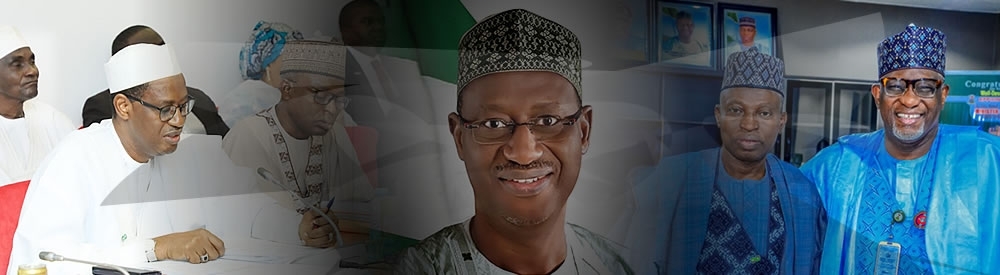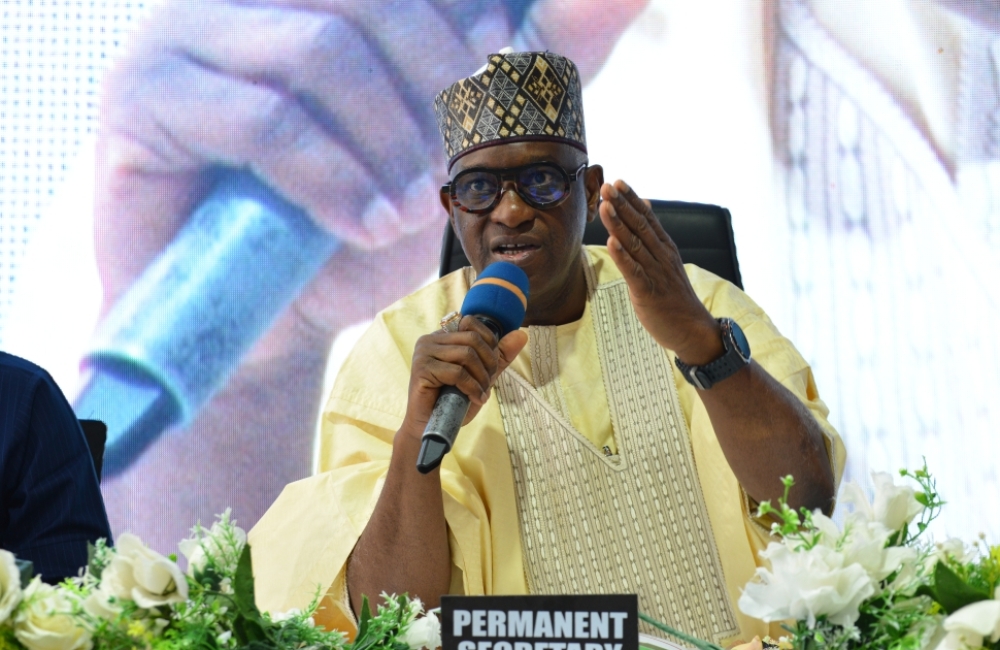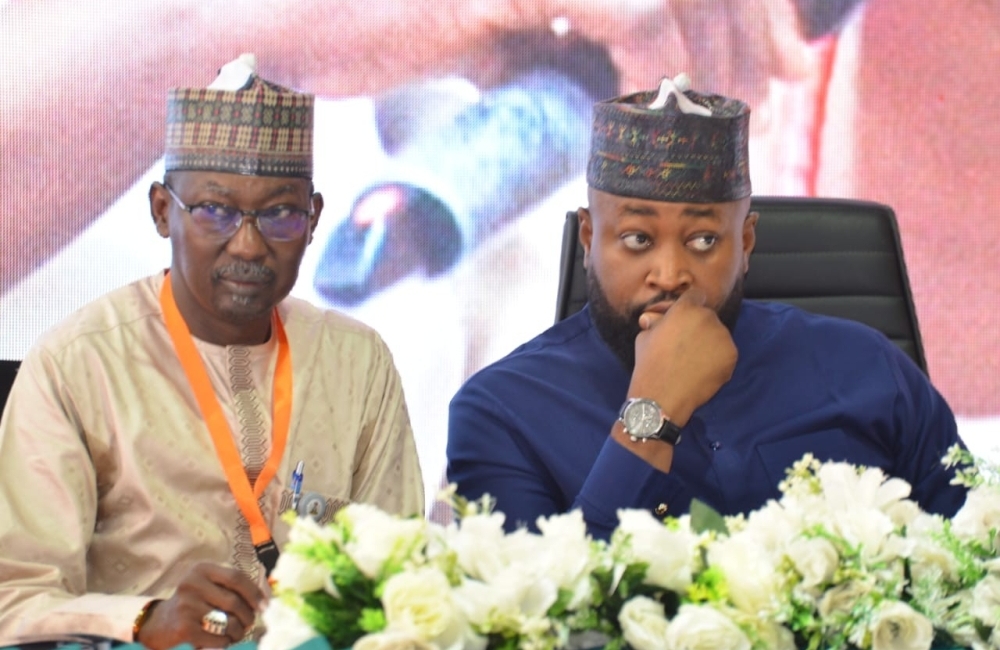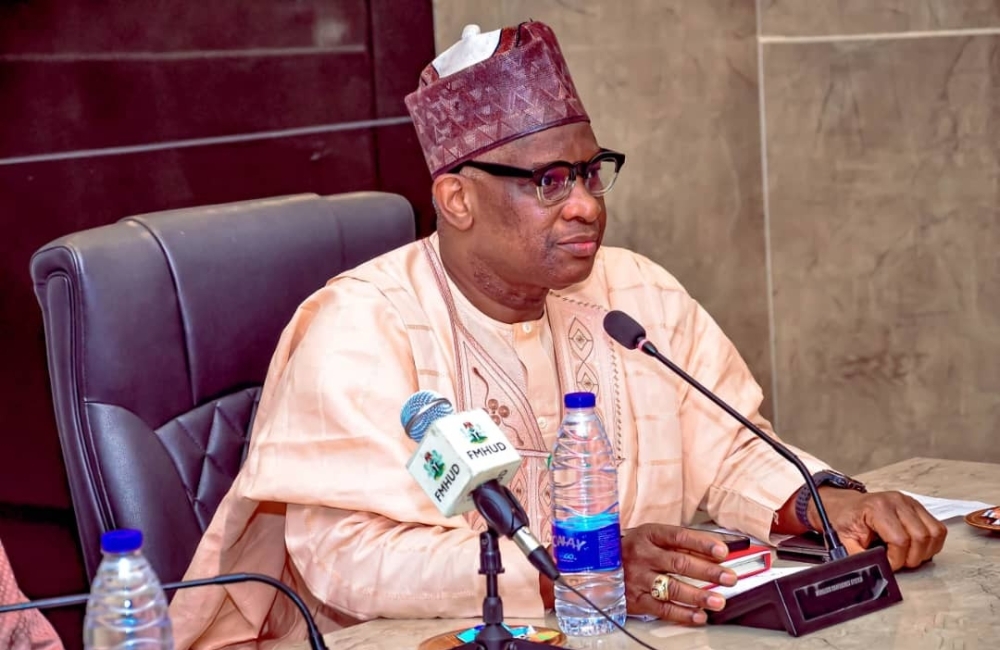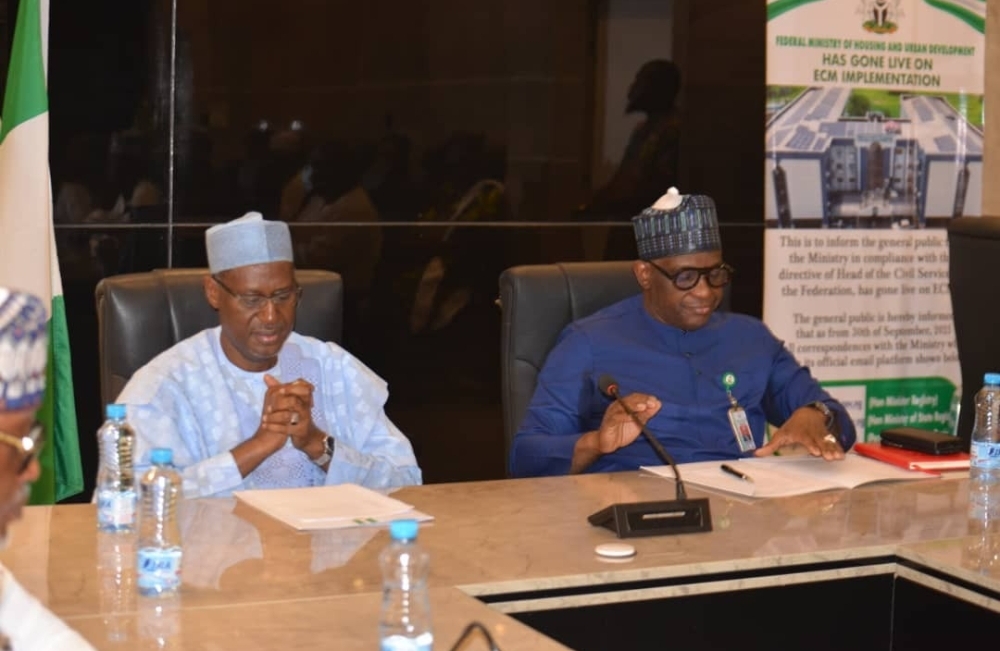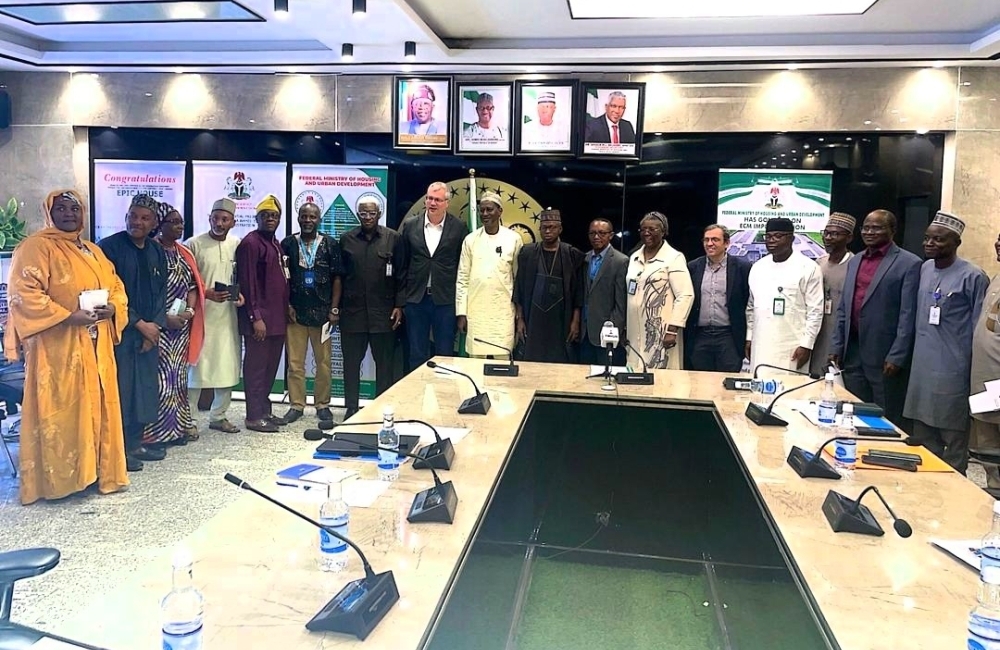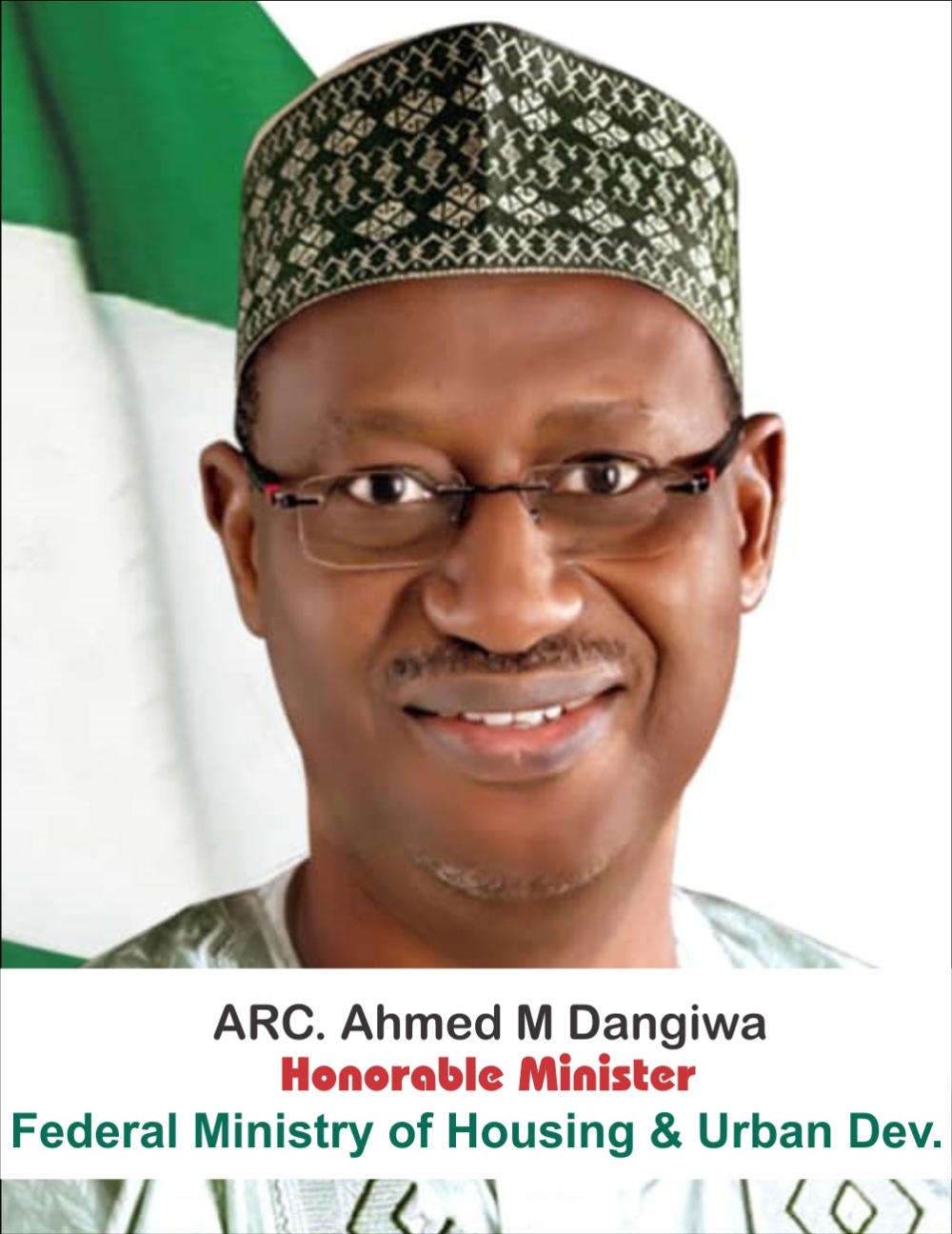
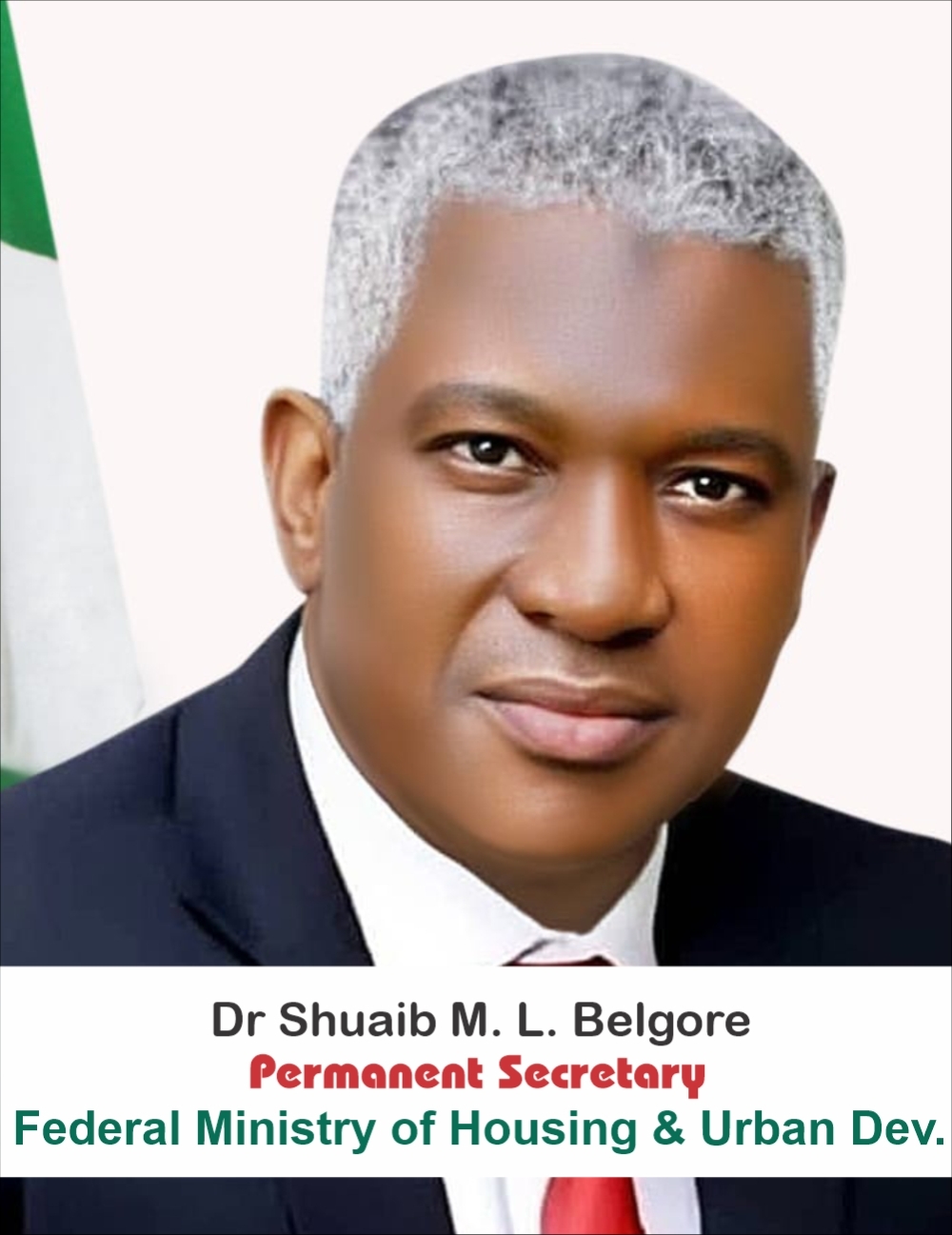
Service Delivery Awards: Dangiwa Urges Housing Ministry To Build On Momentum * As Ministry won OHCSF, SERVICOM and Sporting Awards Housing and Urban Development Minister, Arc. Ahmed Musa Dangiwa, has urged members of staff to build on the current momentum and strengthen the Ministry’s service culture in order to sustain its position as a reference point for excellence in public service delivery. Dangiwa made the call against the backdrop of the various awards won by the ministry, including OHCF, SERVICOM and Sporting events. The Permanent Secretary of the Ministry, Dr. Shuaib Belgore, OON, received the HCSF "Go Live Category Award" for transiting his ministry to paperless operation. Under Dr. Belgore, the ministry adopted the full implementation of the Enterprise Content Management (ECM) operations on the 30th of September 2025, signalling the departure from paper operations. ECM, is a part of the Federal Civil Service Strategy and Implementation Plan 2021-2025 (FCSSIP25), a reform blueprint designed to digitise the federal bureaucracy and transform the civil service into a world-class entity by 2025. Other awards won by the housing ministry are; 2nd Best Ministerial SERVICOM Unit (Ministry Team A), Permanent Secretary's award for strengthening Servivom operations across the ministry as a very supportive CEO. The Head of the Ministry’s Reform Coordination and Service Improvement, Mrs. Philips- Ogoniba Ibifuro also received the 2025 Best NODAL Officer (Ministry Team A), for outstanding coordination, leadership, and dedication to service improvement. The Ministry’s sporting contingent also won 10 medals at the recently concuded Federal Civil Games fedtival held in Yola, Adanawa state. During a brief presentation of the awards to the leadership of the ministry, Minister Dangiwa congratulated the Permanent Secretary Dr Belgore, the Ministry's Servicom Nodal officer, and members of the ministry's sporting contingent for the honours brought to the ministry. He praised the Permanent Secretary’s leadership style, describing it as accountable, team-oriented, and result-driven, noting that the awards represent a win for the entire Ministry. The Minister as well commended the Permanent Secretary for ensuring the smooth implementation of the paperless system in the Ministry, acknowledging the role of the ICT Department team in facilitating the transition alongside the efforts of the entire staff. Similarly, Arc. Dangiwa applauded the Head of the Ministry’s Reform Coordination and Service Improvement, Mrs. Philips- Ogoniba Ibifuro for her SERVICOM’s 2025 Best NODAL Officer award, recognizing her hardwork, professionalism and consistency in applying the SERVICOM principles in the Ministry. The Minister expressed delight over the recognition of the Ministerial SERVICOM Unit as the second-best performing ministerial unit, describing the awards as a reminder that public service is fundamentally about the people being served. “These awards remain with us and remind us that public service is about the people we serve, and that we must always strive to deliver services that are timely, transparent, and of good quality,” he said. The Minister also congratulated the Ministry’s sports team, assuring them of the Ministry’s continued support, both financially and morally, in the coming year. Speaking earlier, the Permanent Secretary, Dr. Shuiab Belgore, expressed appreciation to the Office of the Head of the Civil Service of the Federation for the Transformational CEO award, attributing the recognition to the collective support and commitment of the Ministry’s management and directors. He also commended the Head of Reform and Coordination, Mrs. Phillips Ogoniba, for her outstanding contributions, describing her performance as a source of pride to the Ministry. Belgore further acknowledged the Ministry’s sports team for winning ten medals comprising four golds, three bronze, and three silver, at the Federal Civil Service Games (FEPSGA). He also applauded the ICT Department for driving ECM compliance, noting that improved inter-departmental collaboration has enhanced efficiency across the Ministry. On her part, the Head of Reform Coordination and Service Improvement, Mrs. Philips- Ogoniba dedicated the awards to the leadership of the Ministry, particularly the Honourable Minister and the Permanent Secretary, as well as members of the Ministerial SERVICOM Committee and staff, whose collective efforts and teamwork, she noted, made the achievement possible. She reaffirmed the resolve of the Department to sustain and deepen ongoing reforms aimed at improving service standards, responsiveness, and accountability.
Housing Ministry Goes Digital With ECM System September 30th, 2025 * ECM, a technology-driven system to reduce paper work and improve service delivery The Federal Ministry of Housing and Urban Development will officially go live with its Electronic Content Management (ECM) System, on 30th September, 2025. ECM is a system introduced to digitalize records management and streamline all official correspondences, thereby reducing paperwork and improving service delivery. This development is in line with the directives of the Head of the Civil Service of the Federation, aimed at strengthening efficiency, accountability, and transparency in the operations of Ministries, Departments and Agencies (MDAs). The Ministry is notifying that all external correspondences with the Ministry, henceforth shall be conducted exclusively through its official email platforms listed below: hmregistry@fmhud.gov.ng hmsregistry@fmhud.gov.ng psregistry@fmhud.gov.ng Furthermore, the Ministry will deploy its official website and social media platforms to publicize this initiative and ensure that stakeholders and the wider public are well informed. The Deputy Director and head of the ICT Department of the ministry, Dr. Marcus Amiolemen appreciates the Permanent Secretary, Dr. Shuaib Belgore for providing all the necessary supports and approval for the ECM system to come on stream in the Ministry. The Ministry assures all partners, stakeholders, and members of the public of its commitment to leveraging technology-driven systems to deliver better services in line with global best practices. It could be recalled that the Bureau of Public Service Reforms (BPSR), had last year in October named the Federal Ministry of Housing and Urban Development as the ' Best MDA in Innovative Use of Technology, 2024' and the Honourable Minister Arc. Ahmed Dangiwa honoured with the Award of "Distinguished GovTech Trailblazer". The Director General BPSR, Dr. Dasuku Arabi, stated that the awards were in recognition of the Ministry’s “outstanding leadership in advancing technology initiatives and digitization programmes that contribute to the digital transformation agenda in the public sector and enhance service delivery.” Specifically, BPSR highlighted the launch and efficient operation of the innovative Online Renewed Hope Housing Portal (www.renewedhopehomes.fmhud.gov.ng), by the Ministry, which has made it easier and more convenient for Nigerians to own homes under the Renewed Hope Cities and Estates Programme. The Bureau had also cited the Ministry’s Electronic Certificate of Occupancy Technology System, which has simplified the process of signing and issuing titles for federal real estate, making it faster, easier, transparent, and secure as another breakthrough innovation by the ministry of housing under Arc. Ahmed Musa Dangiwa. ...
Housing Ministry Sensitizes Staff On Innovative Ideas, Creativity. * New ideas improve service efficiency, make work more enjoyable - Belgore Ministry of Housing and Urban Development has organised a one day sensitization programme for management and staff, aimed at encouraging innovation; creativity, and continuous improvement in service delivery. The programme, anchored by the Reform Coordination and Service Improvement was in line with the Government's vision to foster a culture of innovation across all public institutions. It is under the pillar of the Federal Civil Service Strategy and Implementation Plan (FCSSIP 25). In his remarks the Permanent Secretary Dr. Shuaib Belgore emphasized on the importance of innovation in a work environment, noting that it has not received the attention it deserves. He highlighted the need for new ideas to improve service efficiency and make work more enjoyable; “When we have new ideas, we get new energy, we are able to perform better, and also able to satisfy our charter of service to Nigerians”, he stated While restating the Ministry’s primary objectives of providing affordable housing to Nigerians, Dr. Belgore noted that the Ministry also engages in land administration, urban renewal, roads, water, electricity, and other forms of lighting. He expressed delight in flagging off the program, saying that it would enable staff cultivate ideas towards producing innovative ways of addressing service, not limited to the Ministry’s mandate, but ideas that would improve service delivery generally. The Permanent Secretary recalled the innovation challenges conducted by the Head of Service over some years which has generated many ideas across different ministries, with awards for the best ideas. He cited specific examples of innovative ideas at the recent innovation award by the Head of Service to include an internet radio for civil servants and a mentorship program, with the internet radio winning as the best idea. Dr. Belgore expressed confidence in the ministry's ability to produce innovative ideas and win future innovation prizes, urging participants to think of new ways to improve service efficiency. He further encouraged participants to embrace technology and innovative ways of doing things, noting that the world was moving towards everything being technology-driven. Earlier in her welcome remarks, the Head Reform Coordination and Service Improvement department, Ibifuro Philips- Ogoniba (mrs), informed that the third quarter sensitization program was in line with the department's work plan of 2025, and the need to create awareness on innovative principles in the ministry, as part of the federal government reforms FCSSIP 2025, pillar four. She mentioned some of the purpose for the sensitization program to include enhancement of effective service delivery, promoting better attitude to work, enhancement of conducive work environment, amongst others. In his presentation, the representative from the Service Innovation department of the Head of Service, Mr. Henry Nwaedo focused on Design Thinking and its application in civil service innovation. He explained that Design thinking involves visualizing gaps in the environment and finding solutions to address them. Nwaedo further highlighted some benefits and challenges of Design Thinking. Also in his presentation, the Managing Director, Hitech Integrated Services LTD, Micheal Ojiyovwi emphasised that innovation is no longer optional but essential for effective governance and service delivery. He discussed some challenges and solutions in innovation, as well as the role of Information Communication Technology (ICT), pointing out the need for better infrastructure and support for ICT within the civil service. In attendance at the program were; Directors and heads of departments, staff, as well as representatives from the head of civil service of the federation and the private sector. ...
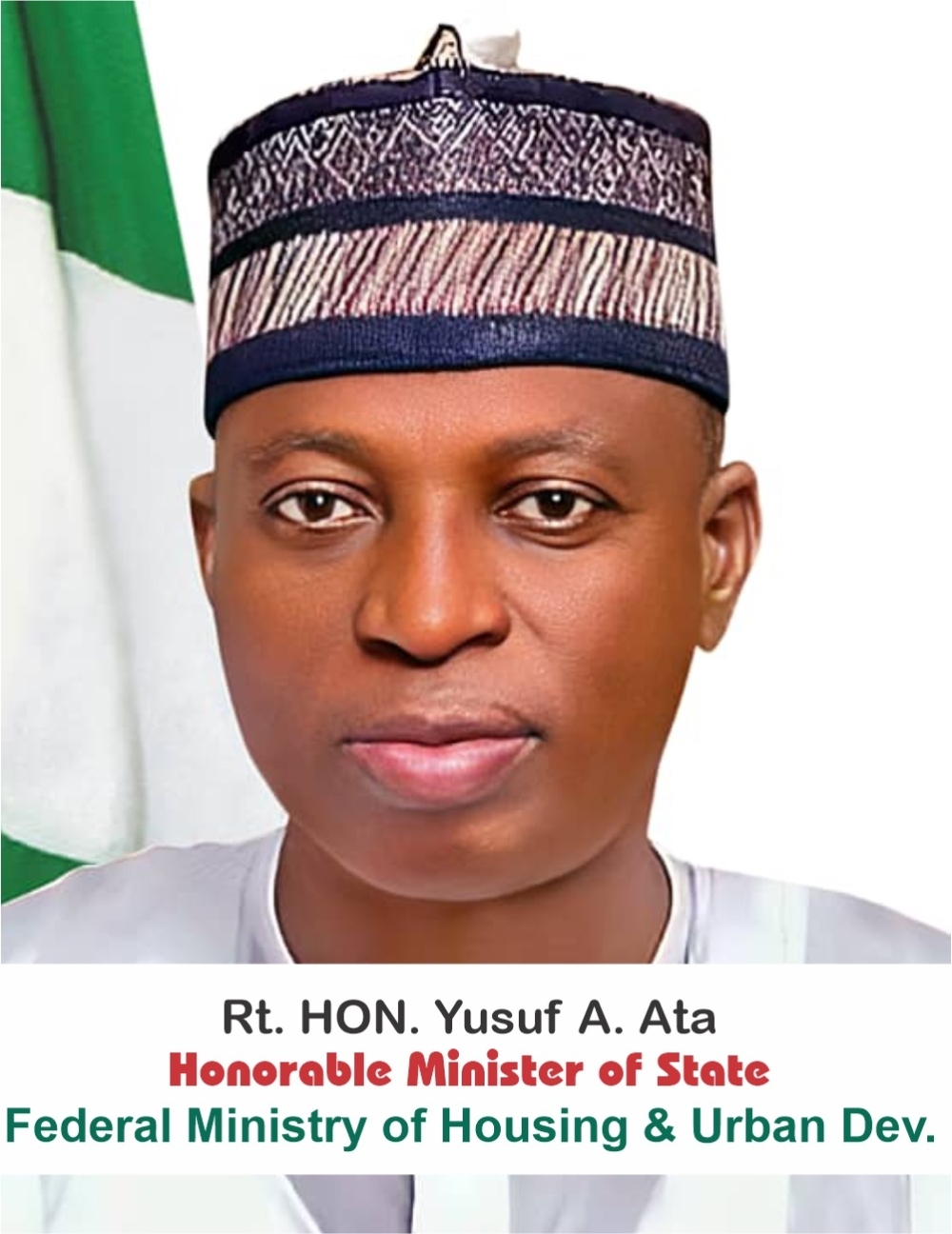
Investment in Building Materials Aligns with FG's Manufacturing Hubs Initiative - Ata Minister of State for Housing and Urban Development, Rt Hon. Yusuf Abdullahi Ata, has commended the large scale Investments in local building materials in Nigeria, saying it gives a boost to the federal government’s building materials manufacturing hubs initiative in the six geo- political zones of the country. Ata made the commendation during his visit to Lagos and Ogun States industrial areas over the weekend. "The growth of building materials industries is a clear indication that investors have heeded the federal government's call to invest heavily in Nigeria, and this gesture is yielding fruitful outcomes." Ata said He explained that Investments in building materials would support the federal government's Renewed Hope Agenda, particularly in the housing sector and impact on the nation’s economy The minister visited Hwani Industrial complex in Shagamu and Abule Owu, Ogun State, noted that the complex's large-scale production of building materials and equipment would significantly contribute to the nation's housing needs. " The large-scale industrial complexes like Hwani would have a positive economic impact, generating revenue, creating jobs, and reducing youth restiveness" he stated He further highlighted the importance of industrial growth, and expressing satisfaction with the industry's modern machinery and manufacturing capabilities, noting that similar complexes in Nigeria's six geo-political zones would reduce unemployment, increase government revenue, and support the federal government's housing initiatives. The Minister was conducted on a tour of Hwani conglomerate, a household manufacturing industry which engages in large-scale production of household wares from foundation to finishing touches, and specializes in the large-scale production of ceramic toilet wares, fitting pipes, and wooden doors. The Managing Director of Hwani Group and Jomoo Nigeria Limited, Mr. Chen Dibau, expressed his gratitude for the Minister's visit, stating that his company is committed to producing affordable and durable household materials and equipment for Nigerians. The MD explained that the industry's large-scale production capacity not only meets Nigeria's needs but also has the potential to cover the entire West African sub-region, providing essential building supplies and materials from start to finish. ...
Ogunbiyi Assumes Office as Perm Sec Housing Ministry, Vows to Uphold Service Ethics in the Ministry
The newly assigned Permanent Secretary to the Federal Ministry of Housing and Urban Development Dr. Marcus Olaniyi Ogunbiyi, has assumed office at the Ministry's Headquarters in Abuja, Friday, January12th, 2024.
Dr Ogunbiyi was deployed to Housing Ministry from the office of the Head of Service of the Federation (OHCSF), where he held fort as the Permanent Secretary, Career Management Office (CMO)
At the occassion, Dr. Ogunbiyi expressed his commitment and readiness to work with the staff of the Ministry, and solicited for their support and cooperation, while also promising to foster peace in order to collectively achieve the desired mandate of the Ministry.
The Permanent Secretary, who is a champion of the Performance Management System, a pillar of the Federal Civil Service Strategy and Implementation Plan (FCSSIP 25), pledged to continue in his quest to promote a seamless implementation of the Plan in the Ministry.
"As great disciples of the Head of Service, we must all do everything possible to uphold the implementation of FCSSIP 25 in our Ministry, because it has come to stay in the Federal Ministry of Housing and Urban Development”, he stressed.
Dr Ogunbiyi took over from the outgoing Permanent Secretary, Works and Housing, Mamuda Mamman, who supervises both the Works and Housing ministries since the demerger of the two ministries in August, 2023. Mamman was deployed to the Federal Ministry of Power.
In his remarks, on behalf of the staff of the Housing ministry, Director and Head of department, Engineering Services, Engr. Cyril Onyeneke welcomed the new Permanent Secretary and expressed enthusiasm to cooperate as well as follow his directions in order to achieve the goals of the Ministry.
Highlight of the occasion was the formal signing and presentation of the handover notes between the outgoing and incoming Permanent Secretaries.
In attendance at the event were the management and staff of the Ministry
Shelter Afrique Holds 42nd AGM In Abuja – Nigeria
The hosting of the 42nd Annual General Meeting (AGM) and Symposium Of Shelter Afrique (SHAF) is now confirmed to be holding in Abuja Nigeria from the 7th -12th of May ,2023.
Shelter Afrique (SHAF) is a company for Habitat and Housing, established in 1982 by African Governments, the African Development Bank (AFDB) and African Reinsurance Corporation (African–Re). This company is dedicated to providing funding solutions for affordable housing projects across Africa
Nigeria is a founding member of this company and holds position as the second largest shareholder after Kenya with investments totaling (USD) $30,724,961:00 and a shareholding of 15.80 %
The Annual General Meeting (AGM) of Shelter Afrique Constitutes the main policy organ of the company and it provides a forum for shareholders to collectively review and deliberate on the performance of the company once every year.
On the other hand, the Annual Symposium held during the AGM, is one of the key activities of Shelter Afrique, which is an avenue for collaboration and synthesizing emerging lessons, knowledge, best practices and innovations. Over the year the symposium has served to document and disseminate information to African Countries, stakeholders and key partners on the provision of affordable housing in Africa.
Nigeria, as at present is the first Vice –President of the 41st AGM Bureau recently held in Victoria Falls, Zimbabwe in July of 2022; making her to be in the pole position to become the Chairman of the 42nd AGM Bureau In this wise, the country is going to host the 42nd AGM Symposium in Abuja by May 2023.
Some of the key stakeholders expected at the meeting are:
a) Real Estate Developers Association of Nigeria (REDAN)
b) Mortgage Bankers Association of Nigeria (MBAN)
c) Family Homes Fund (FHF)
d) Nigeria Mortgage Reinsurance Company (NMRC)
e) Federal Mortgage Bank of Nigeria (FMBN)
f) Federal Housing Authority (FHA)
g) Central Bank of Nigeria (CBN)
h) Association of Professional Bodies of Nigeria (APBN)
i) Nigerian Institute of Town Planners (NITP)
j) Federal and State Ministries and Agencies in charge of Housing, Urban Development, Finance and Economic Matters.
Other activities during this AGM are:
Ministerial Roundtable session with Ministers of Planning Economy and Business Development Investor Relations Session as side event.
It promises to be an impactful session.
Keynote Address Delivered by The Honourable Minister, Federal Ministry of Housing and Urban Development, at The 13th Meeting of The National Council on Lands, Housing and Urban Development, Holding in Gombe, Gombe State, On 11th To 15th November 2024.
Protocols
Distinguished Ladies and Gentlemen,
It is my pleasure to deliver the KeyNote Address at this 13th edition of the National Council on Lands, Housing and Urban Development holding here in Gombe State, the “Jewel of the Savannah”.
I want to sincerely thank His Excellency, the Executive Governor of Gombe State, my dear brother and friend, Alh. Muhammadu Inuwa Yahaya, for graciously accepting to host this year’s Council Meeting and for the warm hospitality that the State has provided for all participants. Thank you, Your Excellency.
I also want to express our profound gratitude to the Distinguished Members of the Senate and House Committees that oversight the Ministry. The Chairman, Senate Committee on Lands, Housing and Urban Development, Senator Sen. Aminu Tambuwal, Chairman; House Committee on Housing and Habitat, Hon. Abdulmumin Jibrin and Chairman, House Committee on Urban Development and Regional Planning, Awaji-Inombek Abiante, I sincerely thank you all for your continual Legislative support for the development of the Housing and Urban Development Sector in Nigeria.
My appreciation goes out to Participants, Thought Leaders and Advocates for their support and expertise towards actualizing the objectives and strategies for the Sector. I thank you all for your efforts and contributions.
At the last Council Meeting in Kaduna last year November, my first Council Meeting as the Hon. Minister of Housing and Urban Development, I said that under the Renewed Hope Agenda of His Excellency President Bola Ahmed Tinubu, GCFR, we are intent on making a major and history defining difference in land administration, housing delivery and management of our urban spaces. I stated clearly that Mr. President is not happy with the state of things in the sector and the very poor progress that we have made in unleashing the capacity of the sector for economic and national development.
I went on to outline the Ministry’s Action Plan and the Key Prioritities of the Renewed Hope Agenda for the sector. This included increasing housing supply to meet the housing shortage, implementing comprehensive land reforms to ease access to land, reforming federal housing institutions including Federal Mortgage Bank of Nigeria and Federal Housing Authority. We also said we would work to establish a National Social Housing Fund to meet the housing needs of no-income, low income and underprivileged Nigerians. Furthermore was the establishment of Building Materials Manufacturing Hubs, one in each geo-political zone of the country to lower the cost of building materials, create local jobs and lower the cost of housing delivery amongst others.
DRIVING ADEQUATE AND AFFORDABLE HOUSING
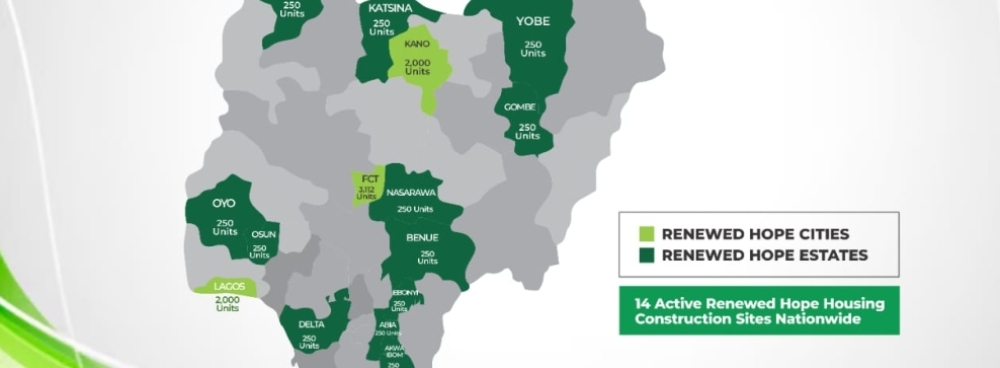
It has been over a year, and I am happy to report that we are making steady progress. Under the Renewed Hope Cities and Estates Programme, we currently have construction underway at fourteen sites, comprising a total of 10,112 housing units. This includes 250-unit Renewed Hope Estates with 1, 2, and 3-bedroom semi-detached bungalows in Yobe, Gombe (NE); Nasarawa, Benue (North Central); Sokoto, Katsina (North West); Abia, Ebonyi (South East); Delta, and Akwa Ibom (South South). Additionally, we have ongoing work at the 3,112-unit Renewed Hope City in the FCT, the 2,000-unit Renewed Hope City in Kano, and another 2,000-unit Renewed Hope City in Lagos. A significant number of these units are at the roofing stage, and we look forward to their completion and commissioning.
We have also acquired land in Enugu and Borno for the development of 2,000-unit Renewed Hope Cities under a PPP arrangement. Planned locations for additional cities include Nasarawa (2,000 units) and Rivers (2,000 units). Our goal is to establish at least one Renewed Hope City in each geo-political zone and the FCT.
To fully appreciate the progress we have made over the past year, it’s essential to establish context. Before the Renewed Hope Agenda, the Ministry had initiated only about 8,000 housing units under the National Housing Programme, with only 3,000 completed over eight years. In one year, under the Renewed Hope Agenda of His Excellency, President Bola Ahmed Tinubu, we are on track to surpass this 8-year performance. Let us give a resounding applause to Mr. President for his vision, the National Assembly for its support, the Ministry’s management and staff, and our partners for this progress.
While it’s worthwhile to acknowledge our achievements, we must remember that we are only scratching the surface. The housing deficit in Nigeria is vast. We need to build approximately 550,000 units annually over the next decade to close this gap. This would require about N5.5 trillion per annum, yet our annual budget for housing remains below N100 billion. This shortfall is why we have embraced Public-Private Partnerships (PPPs) with reputable developers to help deliver housing at the necessary scale. However, PPPs alone cannot deliver affordable housing for the majority of Nigerians, given that the high costs of private-sector construction financing drive up prices.
For instance, a one-bedroom apartment at the Renewed Hope City in Karsana, built under PPP, costs about N22 million, whereas the same one-bedroom unit under the Renewed Hope Estates, funded through budgetary allocations, costs approximately N8-9 million. The difference lies in the cost of finance. Under the Renewed Hope City, developers purchase the land, secure financing at double-digit interest rates, and the FMBN provides a Bankable Offtaker Guarantee. For Renewed Hope Estates, the funds are interest-free from budget allocations, state governments provide free land, and infrastructure costs are not included in unit pricing. Although we introduced cross-subsidies, only a few people will benefit, as developers must sell the majority of units at market rates to recover their investment and repay lenders with interest.
Some may ask why we continue to embrace PPPs. We do so because, as a government, we have a duty to all Nigerians. Our goal is to provide quality housing for all income levels. PPP Renewed Hope Cities target high- to middle-income earners who can afford these prices, while the Renewed Hope Estates serve lower-income segments. In this way, there is something on offer for all categories of Nigerians.
Despite our efforts with PPPs, government financing in housing should increase. The current sub-N100 billion annual budget for housing is inadequate compared to the N5.5 trillion required annually to address our housing deficit. Housing investment fuels economic growth, job creation, and poverty alleviation. For example, constructing the 10,112 units underway nationwide has created over 252,800 jobs for skilled and unskilled workers, with an average of 25 jobs per home. Workers, such as plumbers, masons, and laborers, earn an average of about N150,000 per month with a daily wage of N5,000, in addition to economic activities around the sites. Moreover, an investment of N100 billion in housing construction returns over 80% of that amount to the government through unit sales.
Therefore, we have engaged the National Assembly leadership and received their support for increasing the annual housing budget to a minimum of N500 billion, starting with the 2025 budget cycle. This would allow us to expand housing projects to cover the remaining 18 states and increase the unit count per state from 250 to at least 500, as initially planned. Such an expansion would create more jobs, combat poverty, engage our youth, and prevent them from falling prey to violence or criminal activities. Let us give the National Assembly Leadership a standing ovation for their understanding and support towards tackling this national problem.
The Ministry has signed a Housing Development Partnership with the Shelter Afrique Development (ShafDB). Under the Partnership, the Bank will support the Renewed Hope Housing Program with Advisory Services and financing of competent Developers for an initial pilot programme for the development of 5,000 housing units.
Adding these Ministry-led housing projects to those by agencies such as the Federal Mortgage Bank of Nigeria and the Federal Housing Authority would significantly boost the supply of decent, affordable housing to meet Nigeria’s shelter needs.
We recently returned from the 12th World Urban Forum in Cairo, Egypt. What we observed there was inspiring and should motivate us as a nation to do more. The Egyptian government is constructing a New Cairo City, an urban development estimated at 500 billion Egyptian Pounds (around $10.6 billion). This includes massive housing, road construction, shopping malls, rail systems, and more. While part of the funding comes from entities like the World Bank and IFC, a significant portion is government-sourced through the Administrative Capital for Urban Development (ACUD), the overseeing authority.
We also met with India’s Housing Minister, who shared that India has built over 1 million housing units entirely through government funding.
We noted similar large-scale, government-funded housing efforts in South Africa and other African nations.
The message is clear: while we will continue to drive PPPs, our government needs to do more to finance affordable and social housing for our citizens.
This call extends beyond the federal government. I urge all Commissioners here to encourage their state and local governments to allocate a substantial portion of their revenues to affordable housing delivery while exploring PPPs.
FORGING EFFECTIVE LAND ADMINISTRATION
Besides housing supply, we are also making progress in improving the land administration system in our country as we promised. Effective land governance is important to national and economic development in Nigeria. By ensuring clarity, security, and accessibility in land ownership and transactions, we lay the foundation for increased investment, both domestic and international. Transparent land administration enhances property rights, reduces conflicts, and encourages sustainable land use practices, which together foster a stable environment for economic activities. Furthermore, efficient land governance unlocks revenue opportunities for both federal and state governments through improved land-based taxes and encourages private sector participation in real estate and infrastructure development. These efforts collectively accelerate economic growth, create jobs, and contribute to our broader goals of social equity and inclusive urban development across Nigeria.
Last month, at the 2024 National Technical Development Forum on Land Administration, we launched a new framework for fair and equitable compensation rates for crops and economic trees, ensuring adequate recompense for persons affected by government projects. This initiative, developed with support from the World Bank and the Rural Access and Agricultural Marketing Programme (RAAMP), was validated by forum participants. The last review of these rates was conducted 18 years ago.
23. For example under the revised rates for matured trees in the North Central Zone:
i. Cashew: increased from N2,000 per matured stand to N45,000 and N5.5M for a hectare.
ii. Mango: increased from N4,000 per matured stand to N105,000 and N13M per hectare.
iii. Cocoa: increased from N3,000 per matured stand to N160,000 and N160M per hectare.
Now, Project Affected Persons will receive compensation that reflects current economic realities.
We are also initiating a groundbreaking partnership between the Ministry of Housing and Urban Development and the World Bank to tackle Nigeria’s long-standing land registration challenges. Currently, over 90% of the country’s land remains unregistered, representing an estimated $300 billion in untapped capital.
This partnership aims to work with State Governments to register, document, and title all land parcels, clarifying and securing land ownership to unlock development and investment potential. Through this program, we intend to establish a National Digital Land Information System (NDLIS) to streamline land transactions, making them more efficient, transparent, and accessible. This initiative will boost economic activity and enhance property rights protection, with a goal of increasing formal land transactions from less than 10% to over 50% within a decade. As you are aware we have over 300billion dollars in dead capital because land is not titled and our people cannot leverage land as an economic asset to get loans for their businesses or other investment purposes.
The Federal Ministry of Housing and Urban Development and the World Bank are finalizing the operational framework and investment commitment for this initiative.
Distinguished Ladies and Gentlement, you may recall that last year, we formed a Land Reforms Task Team to review, audit, and devise approaches to operationalize the Land Use Act. The task team has prepared a preliminary report that highlights the need to establish a National Land Commission as a starting point for implementing the Land Use Act and coordinating state land registries.
We have also enhanced the Electronic Certificate of Occupancy (e-C of O) and Land Titling System for all federal government-owned lands across Nigeria's 36 states. This system streamlines the review, approval, and issuance of Certificates of Occupancy, significantly reducing administrative delays for federal land applications.
From fewer than six e-C of Os previously signed, I have, over the past few months, digitally signed over 1,000. As of October 2024, we have approved 417 C of O applications and received 1,079 applications. Our goal is to clear the backlog by the end of December.
SUSTAINABLE URBAN AND REGIONAL DEVELOPMENT DRIVE
Distinguished members of the Council, as we chart the course for urban development in Nigeria, we must grasp the scale of our urban growth and the profound challenges it brings. Nigeria’s urban population is expanding rapidly, driven by an annual growth rate of 4.1%. From just 9.4% in 1950, our urban population now exceeds 52%, with projections indicating a rise to 70% by 2050. By then, Nigeria will likely be the world’s third most populous country, with over 400 million people.
This expansion spans all six geo-political zones, where cities grow at unprecedented rates. Today, we have eight cities with populations above one million and 81 cities with populations between 100,000 and one million. Yet this rapid growth comes with pressing challenges. Approximately 58.8% of our urban residents live in slum conditions, with a national housing deficit of 16-18 million units. Infrastructure is inadequate, and many lack secure land tenure.
Addressing these complex issues requires strategic planning and innovation, which the National Urban Development Policy (NUDP) which is pending approval of the Federal Executive Council aims to deliver. Our goal is to provide a framework that guides long-term, sustainable urban growth, addressing not only housing and infrastructure needs but also creating the foundation for economically vibrant, climate-resilient, and inclusive cities.
The NUDP's vision is clear: to transform Nigeria’s cities into well-functioning, prosperous, resilient, secure, and livable spaces for all. Achieving this vision demands a 'Business Unusual' approach, one that replaces 'Urban Pessimism' with 'Urban Optimism.' This means embracing high-density urban development over sprawl, safeguarding agricultural land and resources, and adopting integrated, evidence-based urban policies.
Our approach includes:
1. Raising public awareness of the potential and challenges of urbanization.
2. Instilling a sense of urgency and optimism among stakeholders to implement sustainable urban strategies.
3. Providing strategic leadership to drive meaningful, short-term gains.
4. Empowering citizens to co-create and sustain this vision.
The NUDP also promotes a 'Healthy Cities' concept, integrating environmental health with secure, resilient urban spaces. This involves essential services like waste management, water, sanitation, and local public health systems. As the recent pandemic has shown, resilience in city design is critical for public health and community well-being. Models like the '15-minute city'—where essential services are within walking distance—offer accessible, self-sufficient neighborhoods that promote health and connectivity.
The NUDP also prioritizes climate responsiveness. Climate change poses a severe threat, with impacts like drought, flooding, and extreme weather intensifying. Without adaptation, climate change could cost Nigeria between 6% and 30% of its GDP by 2050. Therefore, urban planning is a frontline defense in building climate resilience and economic security.
This vision aligns with global commitments, including the 2030 Agenda for Sustainable Development (SDG 11), the Paris Agreement, and the Sendai Framework for Disaster Risk Management. By localizing these goals, we can transform urban spaces to benefit all Nigerians and capture the 'Urban Dividend,' making our cities engines of opportunity, resilience, and well-being.
This is our path to sustainable urbanism, a future where Nigeria’s cities work for everyone, delivering economic, social, and environmental benefits for present and future generations alike.
But to do this we must all work together. Federal, State and Local Governments. We must discuss and collectively agree to drive these initiatives. We must stop working in silos and build synergies. At the twelfth World Urban Forum in Cairo, there was a strong emphasis on devolving the Global conversation on urbanization. We now have an Africa Urban Forum, the last held recently this year in Addis Ababa. At the Forum all African Member Countries, including Nigeria, agreed to organize Annual National Urban Forum in the declaration.
At this Council Meeting, I would therefore direct that in line with the Africa Urban Forum Declaration, we set in motion the process for the organization of an Annual National Urban Forum where we all meet to discuss Nigeria’s Urban Agenda.
In conclusion, as we meet and deliberate at this 13th edition of the National Council on Lands, Housing, and Urban Development, let us reaffirm our shared commitment to reshaping Nigeria’s housing, land, and urban development landscapes. The work we are undertaking is more than just policy—it’s about creating a brighter, more inclusive, and prosperous future for our nation.
I urge each one of you to carry the insights, ideas, and innovative strategies from this meeting back to your respective states and departments, actively advancing our goals for sustainable, affordable housing, effective land administration, and resilient urban spaces. Let us continue building on the progress we've made and work tirelessly to transform our vision of ‘Renewed Hope’ into reality for every Nigerian.
Together, we can foster cities that are economically vibrant, environmentally sustainable, and socially inclusive. The journey ahead requires our unity, our resolve, and our unwavering dedication to delivering real, lasting change.
Thank you, and may our collective efforts here in Gombe pave the way for a stronger, more dynamic Nigeria.
Long Live Nigeria
Long Live His Excellency, President Bola Ahmed Tinubu, GCFR
Keynote Address Delivered by The Honourable Minister, Federal Ministry of Housing and Urban Development, at The 13th Meeting of The National Council on Lands, Housing and Urban Development, Holding in Gombe, Gombe State, On 11th To 15th November 2024.
Protocols
Distinguished Ladies and Gentlemen,
It is my pleasure to deliver the KeyNote Address at this 13th edition of the National Council on Lands, Housing and Urban Development holding here in Gombe State, the “Jewel of the Savannah”.
I want to sincerely thank His Excellency, the Executive Governor of Gombe State, my dear brother and friend, Alh. Muhammadu Inuwa Yahaya, for graciously accepting to host this year’s Council Meeting and for the warm hospitality that the State has provided for all participants. Thank you, Your Excellency.
I also want to express our profound gratitude to the Distinguished Members of the Senate and House Committees that oversight the Ministry. The Chairman, Senate Committee on Lands, Housing and Urban Development, Senator Sen. Aminu Tambuwal, Chairman; House Committee on Housing and Habitat, Hon. Abdulmumin Jibrin and Chairman, House Committee on Urban Development and Regional Planning, Awaji-Inombek Abiante, I sincerely thank you all for your continual Legislative support for the development of the Housing and Urban Development Sector in Nigeria.
My appreciation goes out to Participants, Thought Leaders and Advocates for their support and expertise towards actualizing the objectives and strategies for the Sector. I thank you all for your efforts and contributions.
At the last Council Meeting in Kaduna last year November, my first Council Meeting as the Hon. Minister of Housing and Urban Development, I said that under the Renewed Hope Agenda of His Excellency President Bola Ahmed Tinubu, GCFR, we are intent on making a major and history defining difference in land administration, housing delivery and management of our urban spaces. I stated clearly that Mr. President is not happy with the state of things in the sector and the very poor progress that we have made in unleashing the capacity of the sector for economic and national development.
I went on to outline the Ministry’s Action Plan and the Key Prioritities of the Renewed Hope Agenda for the sector. This included increasing housing supply to meet the housing shortage, implementing comprehensive land reforms to ease access to land, reforming federal housing institutions including Federal Mortgage Bank of Nigeria and Federal Housing Authority. We also said we would work to establish a National Social Housing Fund to meet the housing needs of no-income, low income and underprivileged Nigerians. Furthermore was the establishment of Building Materials Manufacturing Hubs, one in each geo-political zone of the country to lower the cost of building materials, create local jobs and lower the cost of housing delivery amongst others.
DRIVING ADEQUATE AND AFFORDABLE HOUSING
It has been over a year, and I am happy to report that we are making steady progress. Under the Renewed Hope Cities and Estates Programme, we currently have construction underway at fourteen sites, comprising a total of 10,112 housing units. This includes 250-unit Renewed Hope Estates with 1, 2, and 3-bedroom semi-detached bungalows in Yobe, Gombe (NE); Nasarawa, Benue (North Central); Sokoto, Katsina (North West); Abia, Ebonyi (South East); Delta, and Akwa Ibom (South South). Additionally, we have ongoing work at the 3,112-unit Renewed Hope City in the FCT, the 2,000-unit Renewed Hope City in Kano, and another 2,000-unit Renewed Hope City in Lagos. A significant number of these units are at the roofing stage, and we look forward to their completion and commissioning.
We have also acquired land in Enugu and Borno for the development of 2,000-unit Renewed Hope Cities under a PPP arrangement. Planned locations for additional cities include Nasarawa (2,000 units) and Rivers (2,000 units). Our goal is to establish at least one Renewed Hope City in each geo-political zone and the FCT.
To fully appreciate the progress we have made over the past year, it’s essential to establish context. Before the Renewed Hope Agenda, the Ministry had initiated only about 8,000 housing units under the National Housing Programme, with only 3,000 completed over eight years. In one year, under the Renewed Hope Agenda of His Excellency, President Bola Ahmed Tinubu, we are on track to surpass this 8-year performance. Let us give a resounding applause to Mr. President for his vision, the National Assembly for its support, the Ministry’s management and staff, and our partners for this progress.
While it’s worthwhile to acknowledge our achievements, we must remember that we are only scratching the surface. The housing deficit in Nigeria is vast. We need to build approximately 550,000 units annually over the next decade to close this gap. This would require about N5.5 trillion per annum, yet our annual budget for housing remains below N100 billion. This shortfall is why we have embraced Public-Private Partnerships (PPPs) with reputable developers to help deliver housing at the necessary scale. However, PPPs alone cannot deliver affordable housing for the majority of Nigerians, given that the high costs of private-sector construction financing drive up prices.
For instance, a one-bedroom apartment at the Renewed Hope City in Karsana, built under PPP, costs about N22 million, whereas the same one-bedroom unit under the Renewed Hope Estates, funded through budgetary allocations, costs approximately N8-9 million. The difference lies in the cost of finance. Under the Renewed Hope City, developers purchase the land, secure financing at double-digit interest rates, and the FMBN provides a Bankable Offtaker Guarantee. For Renewed Hope Estates, the funds are interest-free from budget allocations, state governments provide free land, and infrastructure costs are not included in unit pricing. Although we introduced cross-subsidies, only a few people will benefit, as developers must sell the majority of units at market rates to recover their investment and repay lenders with interest.
Some may ask why we continue to embrace PPPs. We do so because, as a government, we have a duty to all Nigerians. Our goal is to provide quality housing for all income levels. PPP Renewed Hope Cities target high- to middle-income earners who can afford these prices, while the Renewed Hope Estates serve lower-income segments. In this way, there is something on offer for all categories of Nigerians.
Despite our efforts with PPPs, government financing in housing should increase. The current sub-N100 billion annual budget for housing is inadequate compared to the N5.5 trillion required annually to address our housing deficit. Housing investment fuels economic growth, job creation, and poverty alleviation. For example, constructing the 10,112 units underway nationwide has created over 252,800 jobs for skilled and unskilled workers, with an average of 25 jobs per home. Workers, such as plumbers, masons, and laborers, earn an average of about N150,000 per month with a daily wage of N5,000, in addition to economic activities around the sites. Moreover, an investment of N100 billion in housing construction returns over 80% of that amount to the government through unit sales.
Therefore, we have engaged the National Assembly leadership and received their support for increasing the annual housing budget to a minimum of N500 billion, starting with the 2025 budget cycle. This would allow us to expand housing projects to cover the remaining 18 states and increase the unit count per state from 250 to at least 500, as initially planned. Such an expansion would create more jobs, combat poverty, engage our youth, and prevent them from falling prey to violence or criminal activities. Let us give the National Assembly Leadership a standing ovation for their understanding and support towards tackling this national problem.
The Ministry has signed a Housing Development Partnership with the Shelter Afrique Development (ShafDB). Under the Partnership, the Bank will support the Renewed Hope Housing Program with Advisory Services and financing of competent Developers for an initial pilot programme for the development of 5,000 housing units.
Adding these Ministry-led housing projects to those by agencies such as the Federal Mortgage Bank of Nigeria and the Federal Housing Authority would significantly boost the supply of decent, affordable housing to meet Nigeria’s shelter needs.
We recently returned from the 12th World Urban Forum in Cairo, Egypt. What we observed there was inspiring and should motivate us as a nation to do more. The Egyptian government is constructing a New Cairo City, an urban development estimated at 500 billion Egyptian Pounds (around $10.6 billion). This includes massive housing, road construction, shopping malls, rail systems, and more. While part of the funding comes from entities like the World Bank and IFC, a significant portion is government-sourced through the Administrative Capital for Urban Development (ACUD), the overseeing authority.
We also met with India’s Housing Minister, who shared that India has built over 1 million housing units entirely through government funding.
We noted similar large-scale, government-funded housing efforts in South Africa and other African nations.
The message is clear: while we will continue to drive PPPs, our government needs to do more to finance affordable and social housing for our citizens.
This call extends beyond the federal government. I urge all Commissioners here to encourage their state and local governments to allocate a substantial portion of their revenues to affordable housing delivery while exploring PPPs.
FORGING EFFECTIVE LAND ADMINISTRATION
Besides housing supply, we are also making progress in improving the land administration system in our country as we promised. Effective land governance is important to national and economic development in Nigeria. By ensuring clarity, security, and accessibility in land ownership and transactions, we lay the foundation for increased investment, both domestic and international. Transparent land administration enhances property rights, reduces conflicts, and encourages sustainable land use practices, which together foster a stable environment for economic activities. Furthermore, efficient land governance unlocks revenue opportunities for both federal and state governments through improved land-based taxes and encourages private sector participation in real estate and infrastructure development. These efforts collectively accelerate economic growth, create jobs, and contribute to our broader goals of social equity and inclusive urban development across Nigeria.
Last month, at the 2024 National Technical Development Forum on Land Administration, we launched a new framework for fair and equitable compensation rates for crops and economic trees, ensuring adequate recompense for persons affected by government projects. This initiative, developed with support from the World Bank and the Rural Access and Agricultural Marketing Programme (RAAMP), was validated by forum participants. The last review of these rates was conducted 18 years ago.
23. For example under the revised rates for matured trees in the North Central Zone:
i. Cashew: increased from N2,000 per matured stand to N45,000 and N5.5M for a hectare.
ii. Mango: increased from N4,000 per matured stand to N105,000 and N13M per hectare.
iii. Cocoa: increased from N3,000 per matured stand to N160,000 and N160M per hectare.
Now, Project Affected Persons will receive compensation that reflects current economic realities.
We are also initiating a groundbreaking partnership between the Ministry of Housing and Urban Development and the World Bank to tackle Nigeria’s long-standing land registration challenges. Currently, over 90% of the country’s land remains unregistered, representing an estimated $300 billion in untapped capital.
This partnership aims to work with State Governments to register, document, and title all land parcels, clarifying and securing land ownership to unlock development and investment potential. Through this program, we intend to establish a National Digital Land Information System (NDLIS) to streamline land transactions, making them more efficient, transparent, and accessible. This initiative will boost economic activity and enhance property rights protection, with a goal of increasing formal land transactions from less than 10% to over 50% within a decade. As you are aware we have over 300billion dollars in dead capital because land is not titled and our people cannot leverage land as an economic asset to get loans for their businesses or other investment purposes.
The Federal Ministry of Housing and Urban Development and the World Bank are finalizing the operational framework and investment commitment for this initiative.
Distinguished Ladies and Gentlement, you may recall that last year, we formed a Land Reforms Task Team to review, audit, and devise approaches to operationalize the Land Use Act. The task team has prepared a preliminary report that highlights the need to establish a National Land Commission as a starting point for implementing the Land Use Act and coordinating state land registries.
We have also enhanced the Electronic Certificate of Occupancy (e-C of O) and Land Titling System for all federal government-owned lands across Nigeria's 36 states. This system streamlines the review, approval, and issuance of Certificates of Occupancy, significantly reducing administrative delays for federal land applications.
From fewer than six e-C of Os previously signed, I have, over the past few months, digitally signed over 1,000. As of October 2024, we have approved 417 C of O applications and received 1,079 applications. Our goal is to clear the backlog by the end of December.
SUSTAINABLE URBAN AND REGIONAL DEVELOPMENT DRIVE
Distinguished members of the Council, as we chart the course for urban development in Nigeria, we must grasp the scale of our urban growth and the profound challenges it brings. Nigeria’s urban population is expanding rapidly, driven by an annual growth rate of 4.1%. From just 9.4% in 1950, our urban population now exceeds 52%, with projections indicating a rise to 70% by 2050. By then, Nigeria will likely be the world’s third most populous country, with over 400 million people.
This expansion spans all six geo-political zones, where cities grow at unprecedented rates. Today, we have eight cities with populations above one million and 81 cities with populations between 100,000 and one million. Yet this rapid growth comes with pressing challenges. Approximately 58.8% of our urban residents live in slum conditions, with a national housing deficit of 16-18 million units. Infrastructure is inadequate, and many lack secure land tenure.
Addressing these complex issues requires strategic planning and innovation, which the National Urban Development Policy (NUDP) which is pending approval of the Federal Executive Council aims to deliver. Our goal is to provide a framework that guides long-term, sustainable urban growth, addressing not only housing and infrastructure needs but also creating the foundation for economically vibrant, climate-resilient, and inclusive cities.
The NUDP's vision is clear: to transform Nigeria’s cities into well-functioning, prosperous, resilient, secure, and livable spaces for all. Achieving this vision demands a 'Business Unusual' approach, one that replaces 'Urban Pessimism' with 'Urban Optimism.' This means embracing high-density urban development over sprawl, safeguarding agricultural land and resources, and adopting integrated, evidence-based urban policies.
Our approach includes:
1. Raising public awareness of the potential and challenges of urbanization.
2. Instilling a sense of urgency and optimism among stakeholders to implement sustainable urban strategies.
3. Providing strategic leadership to drive meaningful, short-term gains.
4. Empowering citizens to co-create and sustain this vision.
The NUDP also promotes a 'Healthy Cities' concept, integrating environmental health with secure, resilient urban spaces. This involves essential services like waste management, water, sanitation, and local public health systems. As the recent pandemic has shown, resilience in city design is critical for public health and community well-being. Models like the '15-minute city'—where essential services are within walking distance—offer accessible, self-sufficient neighborhoods that promote health and connectivity.
The NUDP also prioritizes climate responsiveness. Climate change poses a severe threat, with impacts like drought, flooding, and extreme weather intensifying. Without adaptation, climate change could cost Nigeria between 6% and 30% of its GDP by 2050. Therefore, urban planning is a frontline defense in building climate resilience and economic security.
This vision aligns with global commitments, including the 2030 Agenda for Sustainable Development (SDG 11), the Paris Agreement, and the Sendai Framework for Disaster Risk Management. By localizing these goals, we can transform urban spaces to benefit all Nigerians and capture the 'Urban Dividend,' making our cities engines of opportunity, resilience, and well-being.
This is our path to sustainable urbanism, a future where Nigeria’s cities work for everyone, delivering economic, social, and environmental benefits for present and future generations alike.
But to do this we must all work together. Federal, State and Local Governments. We must discuss and collectively agree to drive these initiatives. We must stop working in silos and build synergies. At the twelfth World Urban Forum in Cairo, there was a strong emphasis on devolving the Global conversation on urbanization. We now have an Africa Urban Forum, the last held recently this year in Addis Ababa. At the Forum all African Member Countries, including Nigeria, agreed to organize Annual National Urban Forum in the declaration.
At this Council Meeting, I would therefore direct that in line with the Africa Urban Forum Declaration, we set in motion the process for the organization of an Annual National Urban Forum where we all meet to discuss Nigeria’s Urban Agenda.
In conclusion, as we meet and deliberate at this 13th edition of the National Council on Lands, Housing, and Urban Development, let us reaffirm our shared commitment to reshaping Nigeria’s housing, land, and urban development landscapes. The work we are undertaking is more than just policy—it’s about creating a brighter, more inclusive, and prosperous future for our nation.
I urge each one of you to carry the insights, ideas, and innovative strategies from this meeting back to your respective states and departments, actively advancing our goals for sustainable, affordable housing, effective land administration, and resilient urban spaces. Let us continue building on the progress we've made and work tirelessly to transform our vision of ‘Renewed Hope’ into reality for every Nigerian.
Together, we can foster cities that are economically vibrant, environmentally sustainable, and socially inclusive. The journey ahead requires our unity, our resolve, and our unwavering dedication to delivering real, lasting change.
Thank you, and may our collective efforts here in Gombe pave the way for a stronger, more dynamic Nigeria.
Long Live Nigeria
Long Live His Excellency, President Bola Ahmed Tinubu, GCFR
GROUP PICTURE OF DELEGATES/PARTICIPANTS OF THE 30TH NATIONAL CONFERENCE OF DIRECTORS OF LANDS IN THE FEDERAL AND STATES MINISTRIES, DEPARTMENTS AND AGENCIES, WHICH WAS HELD AT BRISTOL HOTEL, KANO , 25TH & 26TH, NOVEMBER, 2025.
Group picture of Delegates/Participants of the 30th National Conference of Directors of Lands in the Federal and States Ministries, Departments and Agencies, which was held at Bristol Hotel, Kano , 25th & 26th, November, 2025.
HON MINISTER, ARC AHMED DANGIWA RECEIVED NAMIBIAN HON MINISTER OF URBAN AND RURAL DEVELOPMENT, HON SANKWASA JAMES SANKWASA ON A COURTESY VISIT TO HIS OFFICE, FRIDAY, DECEMBER 12TH, 2025
Hon Minister, Arc Ahmed Dangiwa received Namibian Hon Minister of Urban and Rural Development, Hon Sankwasa James Sankwasa on a courtesy visit to his office, Friday, December 12th, 2025