Housing Minister Reaffirms Commitment to Sustainable Housing Delivery for Nigerians
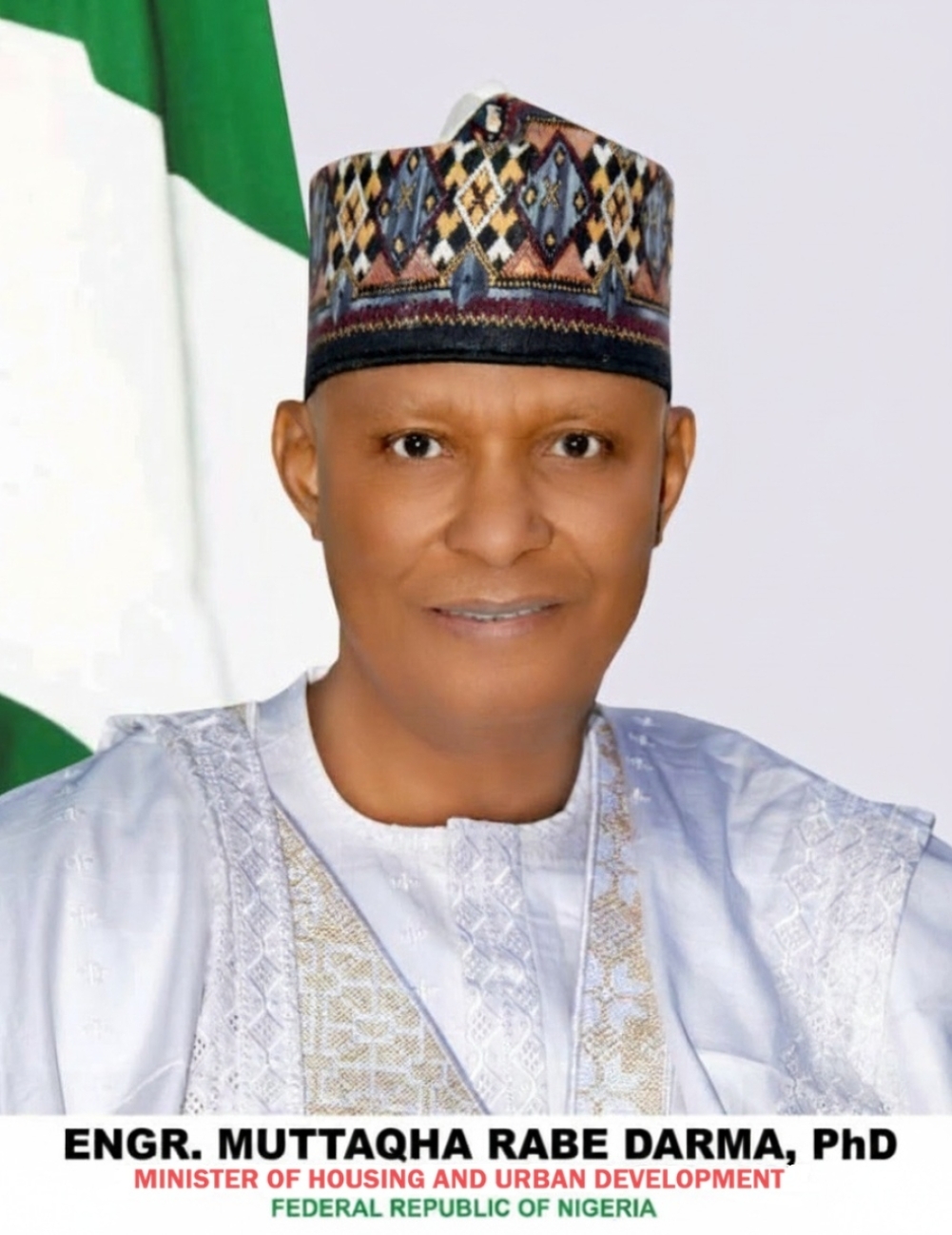
The Honourable Minister of Housing and Urban Development, Engr. Muttaqha Rabe Darma, has reaffirmed the Federal Government's commitment to the timely delivery of sustainable and affordable housing projects to improve the welfare of Nigerians .
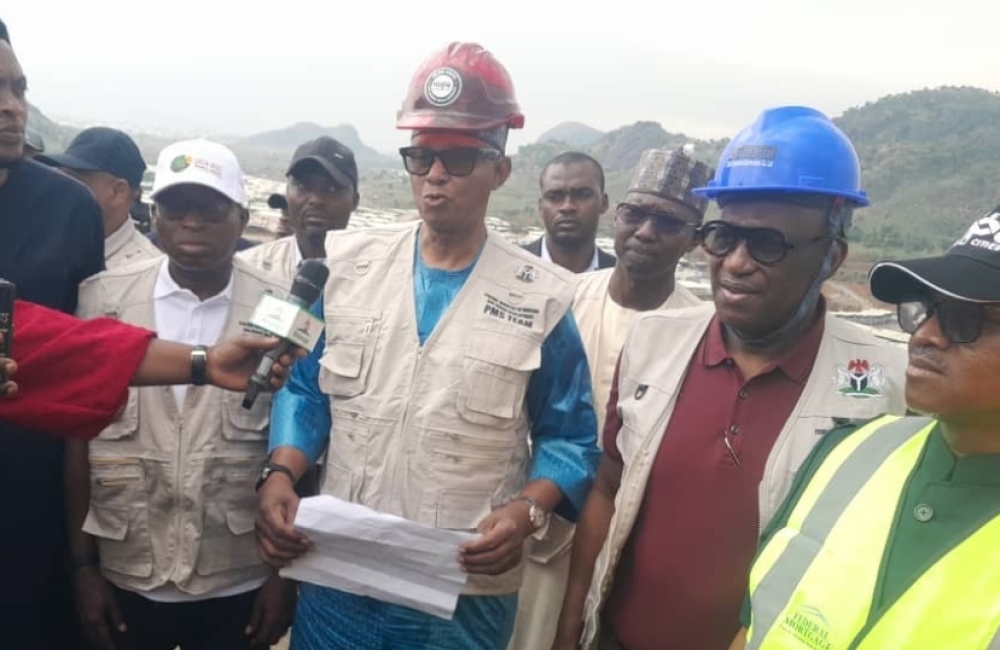
The Minister stated this on Thursday, April 30, 2026, during a familiarization visit to the Renewed Hope Housing Project for military personnel as well as the Renewed Hope City Housing Estate, Karsana in Abuja.
Speaking during the visit, Engr. Darma described the projects as strategic interventions under the Renewed Hope Agenda of President Bola Ahmed Tinubu’s administration, noting that the initiative represents one of the most significant housing legacies for members of the Armed Forces.
According to him, the military housing project, comprising about 1,550 housing units, is being developed with essential infrastructure and facilities including road networks, water supply, schools and sporting facilities to provide a conducive living environment for beneficiaries.
“The visit has provided us the opportunity to assess the level of work on site. This project is a major legacy initiative of the present administration for military personnel, and we are impressed with the level of development and supporting infrastructure being put in place,” the Minister stated.
Engr. Darma emphasized the need for timely completion of the projects, assuring that the Ministry would sustain close monitoring and supervision to ensure quality, durability and compliance with approved standards.
He further stressed that President Bola Ahmed Tinubu places high priority on the provision of affordable and sustainable housing for Nigerians, adding that the Ministry remains committed to delivering on its mandate under the Renewed Hope Agenda.
“Mr. President relies on the Ministry to deliver affordable and sustainable housing for Nigerians, and we are fully committed to achieving that mandate,” he added.
The Minister was informed that the Renewed Hope Housing Estate for military personnel, being executed under a Public-Private Partnership arrangement by Brains and Hammers Limited, has attained about 70 percent completion, while the developers projected a three-month timeline for delivery despite having seven months within the contractual schedule.
Similarly, the 2,744-unit Karsana Housing Estate is nearing completion. The Minister commended the project financiers, the Federal Mortgage Bank of Nigeria and Family Homes Funds Limited, for their support towards the successful execution of the project.
Engr. Darma also lauded the consultants and contractors handling the projects for their dedication and professionalism, while urging them to maintain high standards and imbibe a strong maintenance culture to sustain the Renewed Hope Housing initiative.
The Minister further noted that the Karsana Housing Project has significantly contributed to job creation, with over 15,000 skilled and unskilled workers engaged during the course of the project.
Upon assuming office, Engr. Darma had pledged to build on the achievements already recorded in the housing sector, assuring Nigerians of his commitment to expanding access to affordable housing and promoting sustainable urban development across the country.
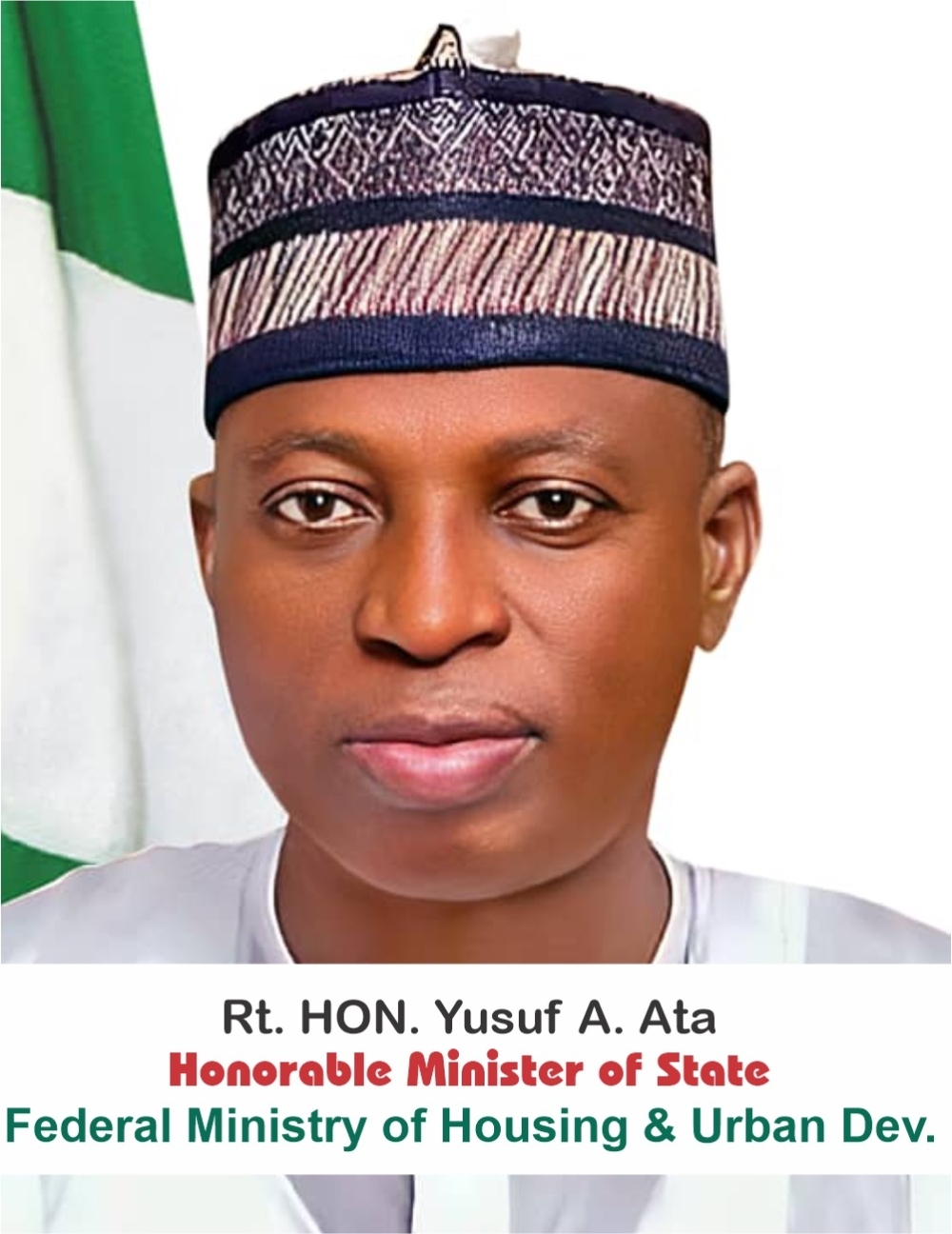
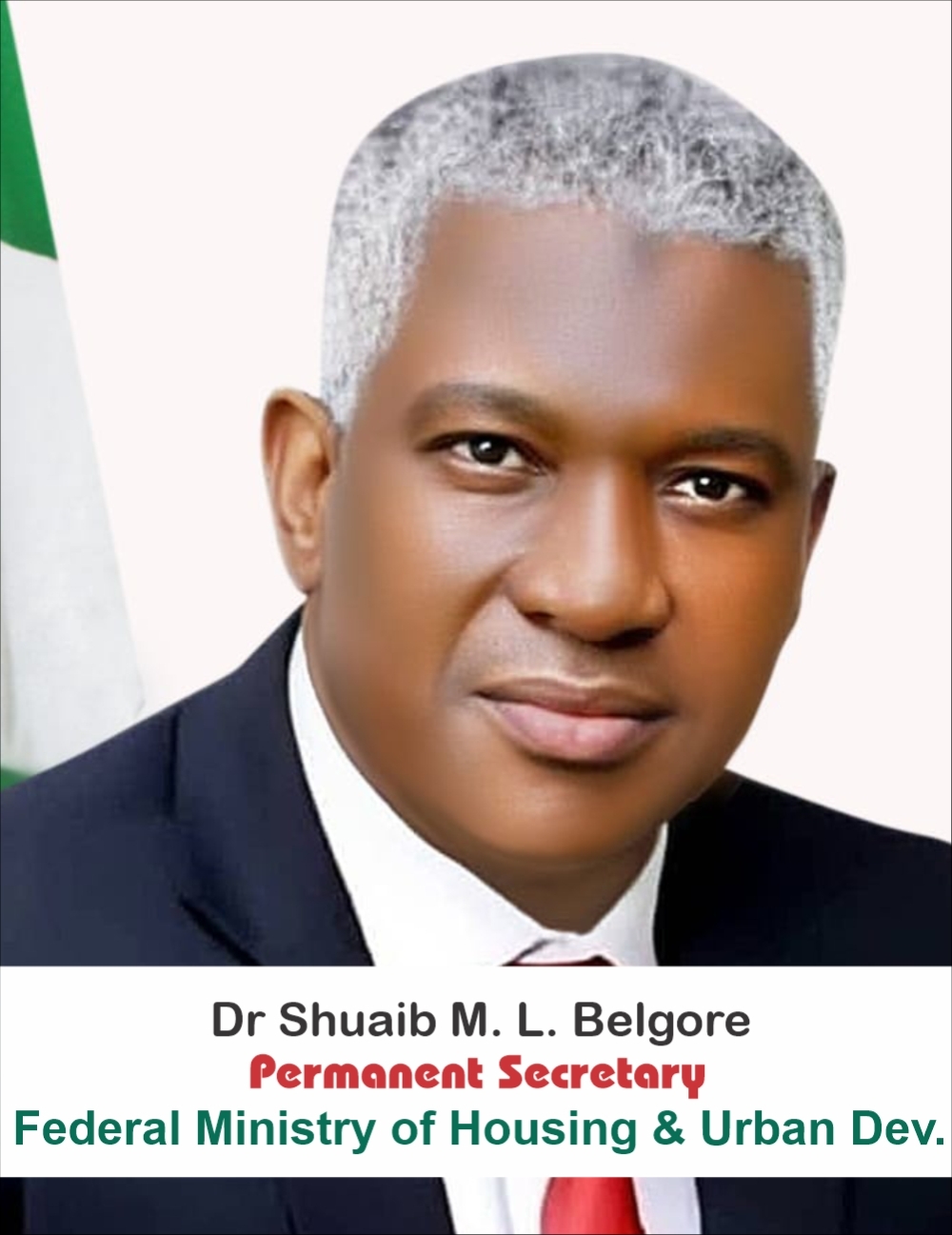
The Honourable Minister was accompanied on the visit by the Honourable Minister of State for Housing and Urban Development, Rt. Hon. Yusuf Abdullahi Ata; the Permanent Secretary of the Ministry, Dr. Shuaib Belgore; Directors of the Ministry; and officials of the Federal Mortgage Bank of Nigeria led by the Managing Director, Shehu Usman Osidi.
Housing Minister Reaffirms Commitment to Sustainable Housing Delivery for Nigerians The Honourable Minister of Housing and Urban Development, Engr. Muttaqha Rabe Darma, has reaffirmed the Federal Government's commitment to the timely delivery of sustainable and affordable housing projects to improve the welfare of Nigerians . The Minister stated this on Thursday, April 30, 2026, during a familiarization visit to the Renewed Hope Housing Project for military personnel as well as the Renewed Hope City Housing Estate, Karsana in Abuja. Speaking during the visit, Engr. Darma described the projects as strategic interventions under the Renewed Hope Agenda of President Bola Ahmed Tinubu’s administration, noting that the initiative represents one of the most significant housing legacies for members of the Armed Forces. According to him, the military housing project, comprising about 1,550 housing units, is being developed with essential infrastructure and facilities including road networks, water supply, schools and sporting facilities to provide a conducive living environment for beneficiaries. “The visit has provided us the opportunity to assess the level of work on site. This project is a major legacy initiative of the present administration for military personnel, and we are impressed with the level of development and supporting infrastructure being put in place,” the Minister stated. Engr. Darma emphasized the need for timely completion of the projects, assuring that the Ministry would sustain close monitoring and supervision to ensure quality, durability and compliance with approved standards. He further stressed that President Bola Ahmed Tinubu places high priority on the provision of affordable and sustainable housing for Nigerians, adding that the Ministry remains committed to delivering on its mandate under the Renewed Hope Agenda. “Mr. President relies on the Ministry to deliver affordable and sustainable housing for Nigerians, and we are fully committed to achieving that mandate,” he added. The Minister was informed that the Renewed Hope Housing Estate for military personnel, being executed under a Public-Private Partnership arrangement by Brains and Hammers Limited, has attained about 70 percent completion, while the developers projected a three-month timeline for delivery despite having seven months within the contractual schedule. Similarly, the 2,744-unit Karsana Housing Estate is nearing completion. The Minister commended the project financiers, the Federal Mortgage Bank of Nigeria and Family Homes Funds Limited, for their support towards the successful execution of the project. Engr. Darma also lauded the consultants and contractors handling the projects for their dedication and professionalism, while urging them to maintain high standards and imbibe a strong maintenance culture to sustain the Renewed Hope Housing initiative. The Minister further noted that the Karsana Housing Project has significantly contributed to job creation, with over 15,000 skilled and unskilled workers engaged during the course of the project. Upon assuming office, Engr. Darma had pledged to build on the achievements already recorded in the housing sector, assuring Nigerians of his commitment to expanding access to affordable housing and promoting sustainable urban development across the country. The Honourable Minister was accompanied on the visit by the Honourable Minister of State for Housing and Urban Development, Rt. Hon. Yusuf Abdullahi Ata; the Permanent Secretary of the Ministry, Dr. Shuaib Belgore; Directors of the Ministry; and officials of the Federal Mortgage Bank of Nigeria led by the Managing Director, Shehu Usman Osidi.
Housing Ministry, NIWA, OSGoF Harmonise Positions for Effective Shoreline Regulations * Approve Unified Procedure for Shoreline Reclamation, Inland Waterways Management Ministry of Housing and Urban Development (FMHUD), National Inland Waterways Authority (NIWA) and Office of Surveyor-General of the Federation (OSGoF) have come up with a unified and transparent framework for the effective control and management of national inland waterways and shorelines. This is part of the resolutions of a meeting of the Technical Inter-Ministerial Committee on the Effective Control and Management of National Inland Waterways and Shorelines. The committee, comprising the Federal Ministry of Housing and Urban Development (FMHUD), the National Inland Waterways Authority (NIWA) and the Office of the Surveyor-General of the Federation (OSGOF), was set up to review, harmonise and update procedures on shoreline reclamation applications, allocations and collaborative regulatory processes. Minister of Housing and Urban Development, Arc. Ahmed Musa Dangiwa, the Managing Director of National Inland Waterways Authority (NIWA), and Surveyor-General of the Federation, set up the tripartite inter ministerial technical committe to carry out the assignment. This is in line with the directives of His Excellency, President Bola Ahmed Tinubu, GCFR, and the aspirations of the Renewed Hope Agenda. The inter ministerial technical committee meeting focused on strengthening inter-agency collaboration, enhancing transparency and safeguarding the national interest in the administration of Nigeria’s shoreline and inland waterways assets. Following extensive deliberations, the Committee approved a unified Standard Application Procedure (SAP) to guide all shoreline allocations, reclamation requests and related approvals, in order to ensure uniformity, accountability and transparency. Under the new framework, all shoreline applications shall commence with the submission of a Letter of Intent to the Federal Ministry of Housing and Urban Development, to be followed by a mandatory joint inspection by FMHUD and NIWA, with the participation of the applicant. The Committee further resolved that provisional allocations shall be based strictly on survey data jointly validated and charted by surveyors from FMHUD, NIWA and the Office of the Surveyor-General of the Federation, in order to prevent encroachment into navigational channels, avoid overlapping grants and safeguard national spatial integrity. In addition, all existing shoreline grants-whether new, active, dormant or pending-shall be subjected to immediate review in line with the newly approved Standard Application Procedure. In accordance with earlier Presidential directives, any approval granted in previous years without evidence of payment of statutory assessed fees has been revoked. For high-sensitivity locations, including Banana Island, the Committee directed that no new approval or extension shall exceed boundaries jointly established by FMHUD, OSGoF and NIWA, adding that strict compliance shall be enforced. To strengthen process integrity and eliminate delays, the Committee approved a mandatory processing timeline of fourteen (14) days for each stage of the shoreline application and approval process. All Provisional Offer Letters shall henceforth carry clear expiration clauses, while non-compliance by officers or applicants shall attract appropriate administrative and regulatory sanctions. The resolutions of the Committee supersede all previous communications, directives, circulars and guidelines issued by any Ministry, Department or Agency in respect of shoreline reclamation, allocation, survey validation and related regulatory matters. The Committee commended the participating agencies for their cooperation and reaffirmed its commitment to a transparent, coordinated and sustainable framework for the management, protection and orderly development of Nigeria’s inland waterways and shorelines. ...
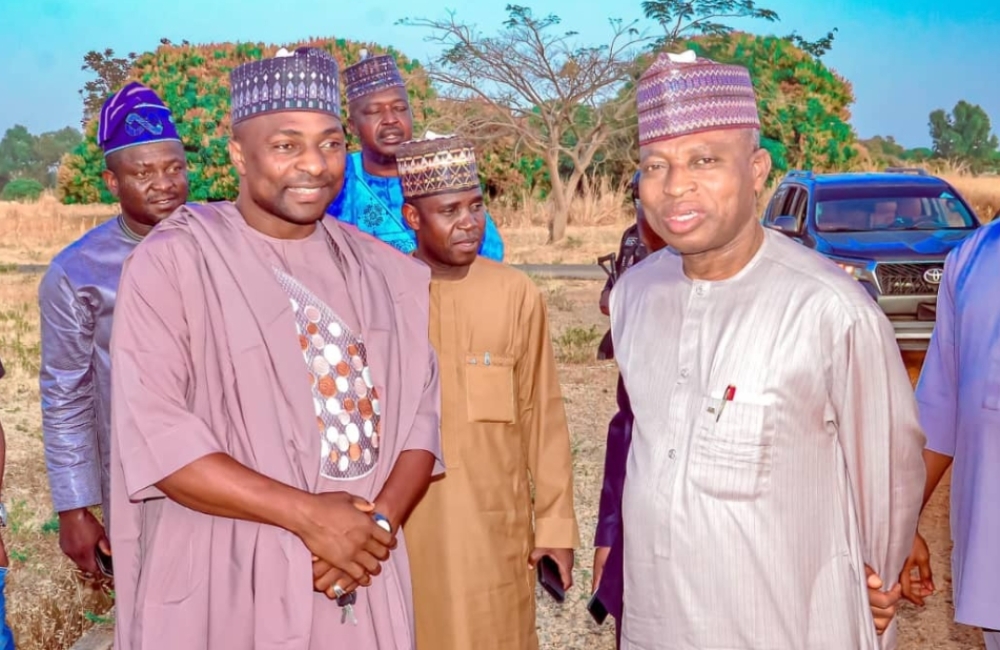
Minister Ata reiterates FG's Commitment to Delivering Affordable Housing * says housing remains a top priority of President Bola Ahmed Tinubu 's Renewed Hope Administration Minister of State for Housing and Urban Development, Rt Hon. Yusuf Abdullahi Ata has reiterated the commitment of the Federal Government to delivering on its promise of providing affordable housing for Nigerians, saying that housing remains a top priority. Ata spoke during an assessment visit to the National Housing Project (NHP) Estate located in Laminga, Jos East local government area, Plateau State. Responding to the request by the Jos east local government for the bulk purchase of some housing units in the estate, Minister Ata said " the Ministry will offer the houses to the local government on current face value, taking in to consideration of some observed delapitation. We will review the initial pricing and address it accordingly" He also reassured the commitment of the Ministry to meeting the housing needs of Nigerians by increasing housing availability and affordability, adding that the administration of President Bola Ahmed Tinubu, GCFR, is working tirelessly to provide housing solutions in the country, through its Renewed Hope Housing Programme. Earlier, the Federal Controller of Housing, Plateau State, Bldr Emmanuel Attah conveyed to the minister the interest of the Jos east local government to bulk- purchase some housing units in the estate and their request for a down review of the initial pricing to enable them take care of the repairs and defray the cost of maintenance for the dilapidated portions in some houses. The NHP Housing Estate in Laminga, Jos Plateau State is expected to provide much-needed housing units, boosting the local economy and improving living standards. The visit by the Hon Minister underscores the government's focus on addressing Nigeria's housing deficit as well as promoting socio - economic well-being of Nigerians ...
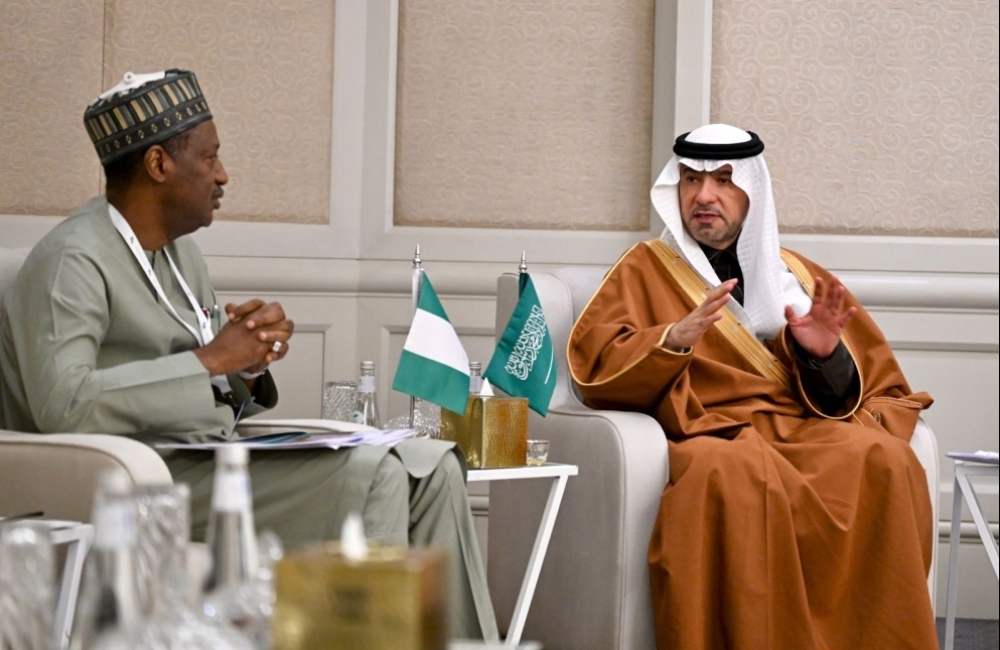
Nigeria, Saudi Arabia Deepen Housing Development Cooperation at 2026 Real Estate Future Forum Riyadh, Saudi Arabia, 30 January 2026: As part of Nigeria’s investor engagement on the sidelines of the 2026 Real Estate Future Forum (RFF 2026) in Riyadh, the Honourable Minister of Housing and Urban Development, Arc. Ahmed Musa Dangiwa, held a high-level bilateral meeting with the Saudi Arabian Minister of Municipal and Rural Affairs and Housing (MOMRAH), Majed bin Abdullah Al-Hogail, alongside senior officials of the Ministry. During the meeting, Arc. Dangiwa presented Nigeria’s flagship Renewed Hope Housing Programme, highlighting its scale, structured delivery architecture, and strong alignment with private capital. He also showcased the Federal Government’s Building Materials Manufacturing Hubs initiative, aimed at accelerating local production, reducing construction costs, creating jobs, and strengthening Nigeria’s construction value chain. “Nigeria is positioning housing not just as a social good, but as a major driver of economic growth, industrialisation, and investment,” Arc. Dangiwa said. “Under the Renewed Hope Housing Programme, we are delivering homes at scale across income segments, supported by clear policies, bankable PPP frameworks, and strong demand fundamentals.” He added that Nigeria is actively seeking strategic partnerships with credible Saudi institutions and firms. “We are keen to deepen collaboration with the Kingdom through MOMRAH and to be introduced to reputable Saudi developers, manufacturers, financiers, and technology partners who are ready to enter the Nigerian market. Our Building Materials Manufacturing Hubs, in particular, offer a compelling opportunity for Saudi investors to participate in local production and long-term value creation,” the Minister noted. In his response, Minister Al-Hogail welcomed Nigeria’s reform-oriented housing agenda and expressed openness to enhanced institutional cooperation between both countries. “Saudi Arabia recognises the scale of Nigeria’s housing demand and the seriousness of the reforms being undertaken to unlock private investment,” Minister Al-Hogail said. “There are clear areas of synergy between our housing and urban development objectives, especially in large-scale housing delivery, construction technologies, and local manufacturing.” He further noted that MOMRAH would support engagement with relevant Saudi stakeholders. “We see value in facilitating connections between Nigerian counterparts and reputable Saudi entities with the experience, capital, and technical capacity to contribute meaningfully to Nigeria’s housing and construction sector,” he added. The meeting reinforces Nigeria’s strategy of leveraging global platforms such as RFF 2026 to mobilise investment, share best practices, and forge strategic alliances that accelerate housing delivery and industrial development under the Renewed Hope Agenda. The Federal Ministry of Housing and Urban Development will continue follow-up engagements with MOMRAH and prospective Saudi partners to translate the discussions into concrete investment pathways and project-level collaborations in Nigeria. ...
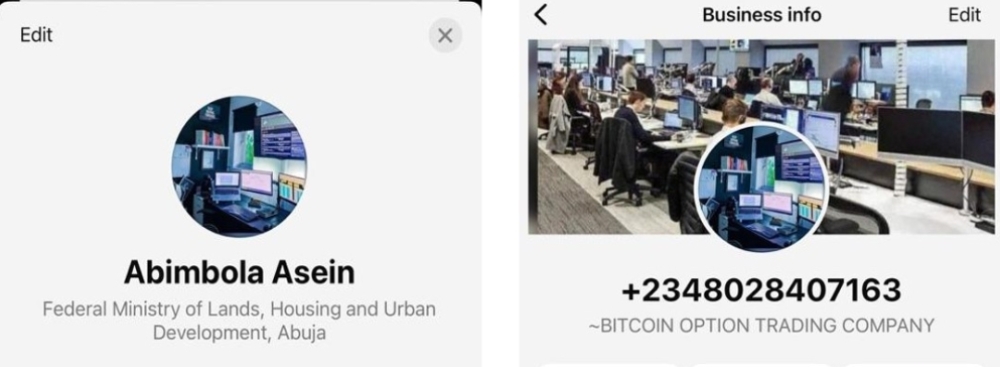
PUBLIC DISCLAIMER
This is to inform family, friends, acquaintances, colleagues in the Federal Ministry of Housing & Urban Development, and the general public that one of my WhatsApp Accounts has been hacked and is currently used for fraud-related activities, including BITCOIN Trading. Consequently, I am constrained to warn all to be on the lookout to avoid being a victim of these unscrupulous persons. You are consequently enjoined to report or ignore any message supposedly emanating from the account or any of my social media modes of communication, soliciting funds, business relationships, Bitcoin transactions, etc.
Please, be guided and assist in giving this disclaimer the widest publication it deserves.
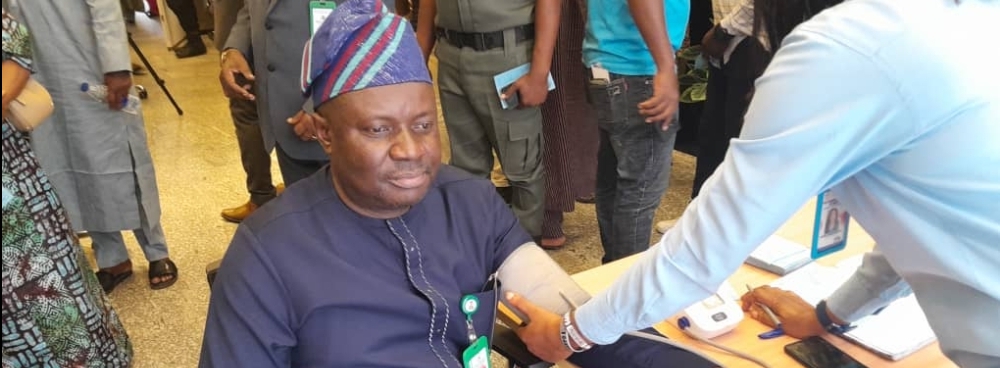
We are Committed to Improving Staff Welfare - Dangiwa
....Engages Tulsi Foundation Hospital to provide Free Medical Eye Test, Care for ministry's staff
As part of its commitment to improving the welfare and well being of staff, the Ministry of Housing and Urban Development, has engaged the Tulsi Chanrai Foundation Eye Hospital, Abuja to provide free eye medical tests and care for the staff of the ministry.
While declaring the commencement of the free eye care exercise, Minister Arc Ahmed Dangiwa, stated that, welfare of staff is paramount in order to build a healthy workforce to attain high performance. According to the minister, the eye hospital service delivery is not for profit venture rather service to humanity.
Earlier, the Permanent Secretary, Dr Marcus Ogunbiyi, described the free eye medical test for the stsff of the ministry as a milestone in response to staff welfare, pointing out that the issue of welfare is not only limited to money, but it covers the overall wellbeing of the staff. Dr Ogunbiyi applauded Minister, Arc Ahmed Dangiwa for bringing this free eye medical care, saying that it is the first of its kind in the ministry.
The coordinator of the Tulsi Chanrai Eye Hospital Foundation, commended the minister for the gesture, ssying that he didn't hesitate in welcoming the idea after mentioning it to him.
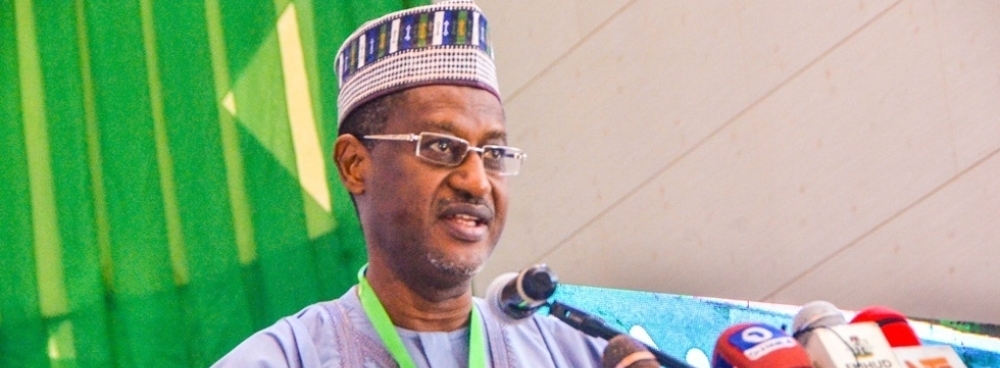
Presentation by the Hon. Minister of Housing and Urban Development, Arc. Ahmed Musa Dangiwa at the State House Gallery, Aso Villa on Sunday, 17th November 2024
Good evening gentlemen of the Press
For the first time in over 25 years, the housing and urban development sector is now receiving the priority and undivided attention that it rightfully deserves. Over the past 14 months, our ministry has worked hard to turn this vision into measurable outcomes. I am proud to report that progress is now visible, impactful, and nationwide.
Our Renewed Hope Homeownership Strategy is equally transformative. We have created a range of affordable options that Nigerians can use to own these homes once they are completed.
This includes:
I want to use this medium to appeal to Nigerians in both formal and informal employment to join the National Housing Fund (NHF) Scheme to enable them benefit from this affordable homeownership options from the Federal Mortgage Bank of Nigeria. They are the best in the market.
Accessing the Renewed Hope Homes is Online
I call it a One-Stop Shop for Homeownership. Nigerians don’t need to lobby anyone to own a home under the Renewed Hope Cities and Estates Programme. You simply visit the site www.renewedhopehomes.fmhud.gov.ng, check the house you want, in the state that you want, apply, pay, print a provisional letter of offer.
I am proud to say that this is first time that Nigeria is having a Central Online Platform for Housing Delivery from search, expression of interest to payment – locally and internationally. In fact, Nigerians living abroad can remotely book a tour of the house, pay for a home in Nigeria using foreign currency online.
About two months ago, the Bureau of Public Service Reforms gave us an award as the “Best Federal MDA in Innovative Use of Technology”
Second is Public-Private Partnerships (PPPs): The 3 Renewed Hope Cities in FCT, Lagos and Kano are all being funded through a PPP that the Ministry signed with a consortium of developers for the delivery of 100,000 housing units nationwide. Under this strategy, the developers source land and construction finance while the government creates an enabling environment for them to deliver housing. So far, the Ministry has facilitated a N100billion Bankable Offtaker Guarantee by the Federal Mortgage Bank of Nigeria (FMBN) for the Karsana Renewed Hope City. This has enabled developers to mobilize over ₦40 billion in financing—a first in the history of Nigeria’s housing sector. We have also made cross subsidy a key part of our efforts to enhance affordability for low-medium income earners to foster integrated living. Under this concept, the housing units built in the Renewed Hope Cities will be sold at commercial rate while a substantial percentage will be sold at concessionary rates to low- and medium-income Nigerians who are members of the Nigeria Labour Congress and the Trade Union Congress.
We have embraced PPPs because our housing deficit is vast and cannot be funded from budgetary allocation alone. We need to build approximately 550,000 units annually over the next decade to close this gap. This would require about N5.5 trillion per annum.
However, we recognize that PPPs alone cannot deliver Renewed Hope Affordable Housing for the majority of Nigerians. This is due to the high costs of private-sector construction financing, which significantly increase housing prices. For example, a one-bedroom apartment at the Renewed Hope City in Karsana, built under a PPP model, costs about N22 million, whereas a similar unit under the Renewed Hope Estates, funded through budgetary allocations, costs approximately N8–9 million.
The difference lies in the cost of finance. Under the Renewed Hope City model, developers purchase the land, secure financing at double-digit interest rates, while as government, we facilate a Bankable Offtaker Guarantee from the FMBN. In contrast, Renewed Hope Estates are funded with interest-free allocations from the budget. State governments provide free land, and infrastructure costs are subsidized and excluded from the housing unit prices. These factors account for the significant price disparity between Renewed Hope Cities and Renewed Hope Estates.
Some may question why we continue to embrace PPPs. The answer is that, as a government, we have a responsibility to serve all Nigerians by stimulating private sector participation in housing delivery. Our objective is to provide quality housing across all income levels. PPP-driven Renewed Hope Cities target high- and middle-income earners who can afford such prices, while Renewed Hope Estates cater to lower-income groups. This approach ensures that every category of Nigerians has access to suitable housing options.
This means that while pursuing PPPs, the government must also increase funding for the Renewed Hope Housing Programme. As a Ministry, we have championed this advocacy, and there is now widespread recognition that the current N50 billion annual budget for housing is grossly inadequate compared to the N5.5 trillion required annually to address the housing deficit.
Therefore, we have engaged the National Assembly leadership and received their support for increasing the annual housing budget to a minimum of N500 billion, starting with the 2025 budget cycle. This would allow us to expand housing projects to cover the remaining 18 states and increase the unit count per state from 250 to at least 500, as initially planned.
Effective Land Administration
Now, Project Affected Persons will receive compensation that reflects current economic realities.
Long Live Nigeria
Long Live Mr. President
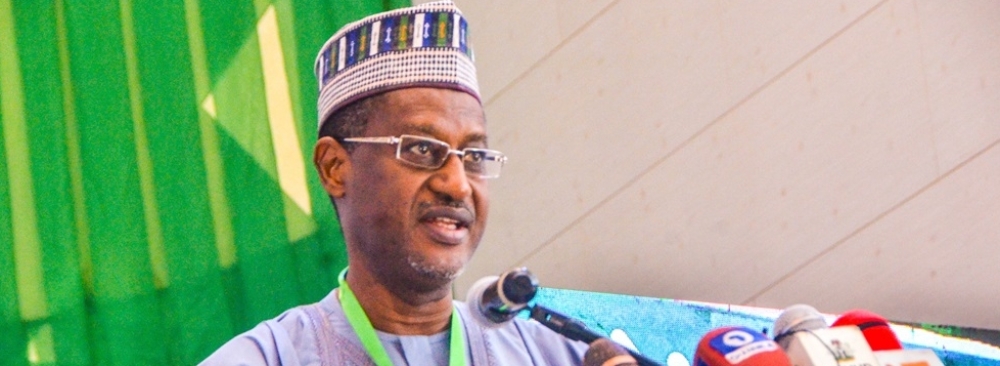
Keynote Address Delivered by The Honourable Minister, Federal Ministry of Housing and Urban Development, at The 13th Meeting of The National Council on Lands, Housing and Urban Development, Holding in Gombe, Gombe State, On 11th To 15th November 2024.
Protocols
Distinguished Ladies and Gentlemen,
It is my pleasure to deliver the KeyNote Address at this 13th edition of the National Council on Lands, Housing and Urban Development holding here in Gombe State, the “Jewel of the Savannah”.
I want to sincerely thank His Excellency, the Executive Governor of Gombe State, my dear brother and friend, Alh. Muhammadu Inuwa Yahaya, for graciously accepting to host this year’s Council Meeting and for the warm hospitality that the State has provided for all participants. Thank you, Your Excellency.
I also want to express our profound gratitude to the Distinguished Members of the Senate and House Committees that oversight the Ministry. The Chairman, Senate Committee on Lands, Housing and Urban Development, Senator Sen. Aminu Tambuwal, Chairman; House Committee on Housing and Habitat, Hon. Abdulmumin Jibrin and Chairman, House Committee on Urban Development and Regional Planning, Awaji-Inombek Abiante, I sincerely thank you all for your continual Legislative support for the development of the Housing and Urban Development Sector in Nigeria.
My appreciation goes out to Participants, Thought Leaders and Advocates for their support and expertise towards actualizing the objectives and strategies for the Sector. I thank you all for your efforts and contributions.
At the last Council Meeting in Kaduna last year November, my first Council Meeting as the Hon. Minister of Housing and Urban Development, I said that under the Renewed Hope Agenda of His Excellency President Bola Ahmed Tinubu, GCFR, we are intent on making a major and history defining difference in land administration, housing delivery and management of our urban spaces. I stated clearly that Mr. President is not happy with the state of things in the sector and the very poor progress that we have made in unleashing the capacity of the sector for economic and national development.
I went on to outline the Ministry’s Action Plan and the Key Prioritities of the Renewed Hope Agenda for the sector. This included increasing housing supply to meet the housing shortage, implementing comprehensive land reforms to ease access to land, reforming federal housing institutions including Federal Mortgage Bank of Nigeria and Federal Housing Authority. We also said we would work to establish a National Social Housing Fund to meet the housing needs of no-income, low income and underprivileged Nigerians. Furthermore was the establishment of Building Materials Manufacturing Hubs, one in each geo-political zone of the country to lower the cost of building materials, create local jobs and lower the cost of housing delivery amongst others.
DRIVING ADEQUATE AND AFFORDABLE HOUSING
It has been over a year, and I am happy to report that we are making steady progress. Under the Renewed Hope Cities and Estates Programme, we currently have construction underway at fourteen sites, comprising a total of 10,112 housing units. This includes 250-unit Renewed Hope Estates with 1, 2, and 3-bedroom semi-detached bungalows in Yobe, Gombe (NE); Nasarawa, Benue (North Central); Sokoto, Katsina (North West); Abia, Ebonyi (South East); Delta, and Akwa Ibom (South South). Additionally, we have ongoing work at the 3,112-unit Renewed Hope City in the FCT, the 2,000-unit Renewed Hope City in Kano, and another 2,000-unit Renewed Hope City in Lagos. A significant number of these units are at the roofing stage, and we look forward to their completion and commissioning.
We have also acquired land in Enugu and Borno for the development of 2,000-unit Renewed Hope Cities under a PPP arrangement. Planned locations for additional cities include Nasarawa (2,000 units) and Rivers (2,000 units). Our goal is to establish at least one Renewed Hope City in each geo-political zone and the FCT.
To fully appreciate the progress we have made over the past year, it’s essential to establish context. Before the Renewed Hope Agenda, the Ministry had initiated only about 8,000 housing units under the National Housing Programme, with only 3,000 completed over eight years. In one year, under the Renewed Hope Agenda of His Excellency, President Bola Ahmed Tinubu, we are on track to surpass this 8-year performance. Let us give a resounding applause to Mr. President for his vision, the National Assembly for its support, the Ministry’s management and staff, and our partners for this progress.
While it’s worthwhile to acknowledge our achievements, we must remember that we are only scratching the surface. The housing deficit in Nigeria is vast. We need to build approximately 550,000 units annually over the next decade to close this gap. This would require about N5.5 trillion per annum, yet our annual budget for housing remains below N100 billion. This shortfall is why we have embraced Public-Private Partnerships (PPPs) with reputable developers to help deliver housing at the necessary scale. However, PPPs alone cannot deliver affordable housing for the majority of Nigerians, given that the high costs of private-sector construction financing drive up prices.
For instance, a one-bedroom apartment at the Renewed Hope City in Karsana, built under PPP, costs about N22 million, whereas the same one-bedroom unit under the Renewed Hope Estates, funded through budgetary allocations, costs approximately N8-9 million. The difference lies in the cost of finance. Under the Renewed Hope City, developers purchase the land, secure financing at double-digit interest rates, and the FMBN provides a Bankable Offtaker Guarantee. For Renewed Hope Estates, the funds are interest-free from budget allocations, state governments provide free land, and infrastructure costs are not included in unit pricing. Although we introduced cross-subsidies, only a few people will benefit, as developers must sell the majority of units at market rates to recover their investment and repay lenders with interest.
Some may ask why we continue to embrace PPPs. We do so because, as a government, we have a duty to all Nigerians. Our goal is to provide quality housing for all income levels. PPP Renewed Hope Cities target high- to middle-income earners who can afford these prices, while the Renewed Hope Estates serve lower-income segments. In this way, there is something on offer for all categories of Nigerians.
Despite our efforts with PPPs, government financing in housing should increase. The current sub-N100 billion annual budget for housing is inadequate compared to the N5.5 trillion required annually to address our housing deficit. Housing investment fuels economic growth, job creation, and poverty alleviation. For example, constructing the 10,112 units underway nationwide has created over 252,800 jobs for skilled and unskilled workers, with an average of 25 jobs per home. Workers, such as plumbers, masons, and laborers, earn an average of about N150,000 per month with a daily wage of N5,000, in addition to economic activities around the sites. Moreover, an investment of N100 billion in housing construction returns over 80% of that amount to the government through unit sales.
Therefore, we have engaged the National Assembly leadership and received their support for increasing the annual housing budget to a minimum of N500 billion, starting with the 2025 budget cycle. This would allow us to expand housing projects to cover the remaining 18 states and increase the unit count per state from 250 to at least 500, as initially planned. Such an expansion would create more jobs, combat poverty, engage our youth, and prevent them from falling prey to violence or criminal activities. Let us give the National Assembly Leadership a standing ovation for their understanding and support towards tackling this national problem.
The Ministry has signed a Housing Development Partnership with the Shelter Afrique Development (ShafDB). Under the Partnership, the Bank will support the Renewed Hope Housing Program with Advisory Services and financing of competent Developers for an initial pilot programme for the development of 5,000 housing units.
Adding these Ministry-led housing projects to those by agencies such as the Federal Mortgage Bank of Nigeria and the Federal Housing Authority would significantly boost the supply of decent, affordable housing to meet Nigeria’s shelter needs.
We recently returned from the 12th World Urban Forum in Cairo, Egypt. What we observed there was inspiring and should motivate us as a nation to do more. The Egyptian government is constructing a New Cairo City, an urban development estimated at 500 billion Egyptian Pounds (around $10.6 billion). This includes massive housing, road construction, shopping malls, rail systems, and more. While part of the funding comes from entities like the World Bank and IFC, a significant portion is government-sourced through the Administrative Capital for Urban Development (ACUD), the overseeing authority.
We also met with India’s Housing Minister, who shared that India has built over 1 million housing units entirely through government funding.
We noted similar large-scale, government-funded housing efforts in South Africa and other African nations.
The message is clear: while we will continue to drive PPPs, our government needs to do more to finance affordable and social housing for our citizens.
This call extends beyond the federal government. I urge all Commissioners here to encourage their state and local governments to allocate a substantial portion of their revenues to affordable housing delivery while exploring PPPs.
FORGING EFFECTIVE LAND ADMINISTRATION
Besides housing supply, we are also making progress in improving the land administration system in our country as we promised. Effective land governance is important to national and economic development in Nigeria. By ensuring clarity, security, and accessibility in land ownership and transactions, we lay the foundation for increased investment, both domestic and international. Transparent land administration enhances property rights, reduces conflicts, and encourages sustainable land use practices, which together foster a stable environment for economic activities. Furthermore, efficient land governance unlocks revenue opportunities for both federal and state governments through improved land-based taxes and encourages private sector participation in real estate and infrastructure development. These efforts collectively accelerate economic growth, create jobs, and contribute to our broader goals of social equity and inclusive urban development across Nigeria.
Last month, at the 2024 National Technical Development Forum on Land Administration, we launched a new framework for fair and equitable compensation rates for crops and economic trees, ensuring adequate recompense for persons affected by government projects. This initiative, developed with support from the World Bank and the Rural Access and Agricultural Marketing Programme (RAAMP), was validated by forum participants. The last review of these rates was conducted 18 years ago.
23. For example under the revised rates for matured trees in the North Central Zone:
i. Cashew: increased from N2,000 per matured stand to N45,000 and N5.5M for a hectare.
ii. Mango: increased from N4,000 per matured stand to N105,000 and N13M per hectare.
iii. Cocoa: increased from N3,000 per matured stand to N160,000 and N160M per hectare.
Now, Project Affected Persons will receive compensation that reflects current economic realities.
We are also initiating a groundbreaking partnership between the Ministry of Housing and Urban Development and the World Bank to tackle Nigeria’s long-standing land registration challenges. Currently, over 90% of the country’s land remains unregistered, representing an estimated $300 billion in untapped capital.
This partnership aims to work with State Governments to register, document, and title all land parcels, clarifying and securing land ownership to unlock development and investment potential. Through this program, we intend to establish a National Digital Land Information System (NDLIS) to streamline land transactions, making them more efficient, transparent, and accessible. This initiative will boost economic activity and enhance property rights protection, with a goal of increasing formal land transactions from less than 10% to over 50% within a decade. As you are aware we have over 300billion dollars in dead capital because land is not titled and our people cannot leverage land as an economic asset to get loans for their businesses or other investment purposes.
The Federal Ministry of Housing and Urban Development and the World Bank are finalizing the operational framework and investment commitment for this initiative.
Distinguished Ladies and Gentlement, you may recall that last year, we formed a Land Reforms Task Team to review, audit, and devise approaches to operationalize the Land Use Act. The task team has prepared a preliminary report that highlights the need to establish a National Land Commission as a starting point for implementing the Land Use Act and coordinating state land registries.
We have also enhanced the Electronic Certificate of Occupancy (e-C of O) and Land Titling System for all federal government-owned lands across Nigeria's 36 states. This system streamlines the review, approval, and issuance of Certificates of Occupancy, significantly reducing administrative delays for federal land applications.
From fewer than six e-C of Os previously signed, I have, over the past few months, digitally signed over 1,000. As of October 2024, we have approved 417 C of O applications and received 1,079 applications. Our goal is to clear the backlog by the end of December.
SUSTAINABLE URBAN AND REGIONAL DEVELOPMENT DRIVE
Distinguished members of the Council, as we chart the course for urban development in Nigeria, we must grasp the scale of our urban growth and the profound challenges it brings. Nigeria’s urban population is expanding rapidly, driven by an annual growth rate of 4.1%. From just 9.4% in 1950, our urban population now exceeds 52%, with projections indicating a rise to 70% by 2050. By then, Nigeria will likely be the world’s third most populous country, with over 400 million people.
This expansion spans all six geo-political zones, where cities grow at unprecedented rates. Today, we have eight cities with populations above one million and 81 cities with populations between 100,000 and one million. Yet this rapid growth comes with pressing challenges. Approximately 58.8% of our urban residents live in slum conditions, with a national housing deficit of 16-18 million units. Infrastructure is inadequate, and many lack secure land tenure.
Addressing these complex issues requires strategic planning and innovation, which the National Urban Development Policy (NUDP) which is pending approval of the Federal Executive Council aims to deliver. Our goal is to provide a framework that guides long-term, sustainable urban growth, addressing not only housing and infrastructure needs but also creating the foundation for economically vibrant, climate-resilient, and inclusive cities.
The NUDP's vision is clear: to transform Nigeria’s cities into well-functioning, prosperous, resilient, secure, and livable spaces for all. Achieving this vision demands a 'Business Unusual' approach, one that replaces 'Urban Pessimism' with 'Urban Optimism.' This means embracing high-density urban development over sprawl, safeguarding agricultural land and resources, and adopting integrated, evidence-based urban policies.
Our approach includes:
1. Raising public awareness of the potential and challenges of urbanization.
2. Instilling a sense of urgency and optimism among stakeholders to implement sustainable urban strategies.
3. Providing strategic leadership to drive meaningful, short-term gains.
4. Empowering citizens to co-create and sustain this vision.
The NUDP also promotes a 'Healthy Cities' concept, integrating environmental health with secure, resilient urban spaces. This involves essential services like waste management, water, sanitation, and local public health systems. As the recent pandemic has shown, resilience in city design is critical for public health and community well-being. Models like the '15-minute city'—where essential services are within walking distance—offer accessible, self-sufficient neighborhoods that promote health and connectivity.
The NUDP also prioritizes climate responsiveness. Climate change poses a severe threat, with impacts like drought, flooding, and extreme weather intensifying. Without adaptation, climate change could cost Nigeria between 6% and 30% of its GDP by 2050. Therefore, urban planning is a frontline defense in building climate resilience and economic security.
This vision aligns with global commitments, including the 2030 Agenda for Sustainable Development (SDG 11), the Paris Agreement, and the Sendai Framework for Disaster Risk Management. By localizing these goals, we can transform urban spaces to benefit all Nigerians and capture the 'Urban Dividend,' making our cities engines of opportunity, resilience, and well-being.
This is our path to sustainable urbanism, a future where Nigeria’s cities work for everyone, delivering economic, social, and environmental benefits for present and future generations alike.
But to do this we must all work together. Federal, State and Local Governments. We must discuss and collectively agree to drive these initiatives. We must stop working in silos and build synergies. At the twelfth World Urban Forum in Cairo, there was a strong emphasis on devolving the Global conversation on urbanization. We now have an Africa Urban Forum, the last held recently this year in Addis Ababa. At the Forum all African Member Countries, including Nigeria, agreed to organize Annual National Urban Forum in the declaration.
At this Council Meeting, I would therefore direct that in line with the Africa Urban Forum Declaration, we set in motion the process for the organization of an Annual National Urban Forum where we all meet to discuss Nigeria’s Urban Agenda.
In conclusion, as we meet and deliberate at this 13th edition of the National Council on Lands, Housing, and Urban Development, let us reaffirm our shared commitment to reshaping Nigeria’s housing, land, and urban development landscapes. The work we are undertaking is more than just policy—it’s about creating a brighter, more inclusive, and prosperous future for our nation.
I urge each one of you to carry the insights, ideas, and innovative strategies from this meeting back to your respective states and departments, actively advancing our goals for sustainable, affordable housing, effective land administration, and resilient urban spaces. Let us continue building on the progress we've made and work tirelessly to transform our vision of ‘Renewed Hope’ into reality for every Nigerian.
Together, we can foster cities that are economically vibrant, environmentally sustainable, and socially inclusive. The journey ahead requires our unity, our resolve, and our unwavering dedication to delivering real, lasting change.
Thank you, and may our collective efforts here in Gombe pave the way for a stronger, more dynamic Nigeria.
Long Live Nigeria
Long Live His Excellency, President Bola Ahmed Tinubu, GCFR

Housing Ministry, Shelter Advisory Convene Summit on Renewed Hope Housing PPP
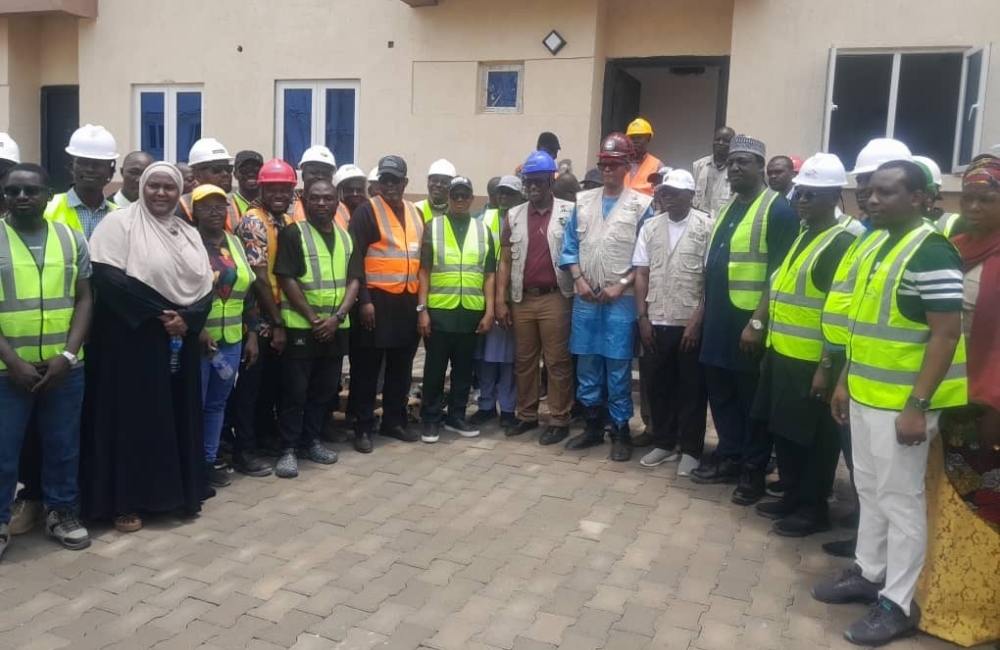
HON MINISTER, FMHUD, ENGR MUTTAQHA RABE DARMA, PHD, HON MINISTER OF STATE, HON. YUSUF ATA, THE PERMANENT SECRETARY AND OTHER MANAGEMENT STAFF OF THE MINISTRY ON INSPECTION VISIT TO KARSANA RENEWED HOPE CITY AND FEDERAL GOVT MILITARY HOUSING ESTATE (BRAIN & HAMMERS), ABUJA. ,APRIL 30TH, 2026
Hon Minister, FMHUD, Engr Muttaqha Rabe Darma, Hon Minister of State, Hon. Yusuf Ata, the Permanent Secretary and other management staff of the Ministry on inspection visit to Karsana Renewed Hope City and Federal Govt Military Housing Estate (Brain & Hammers), Abuja. ,April 30th, 2026
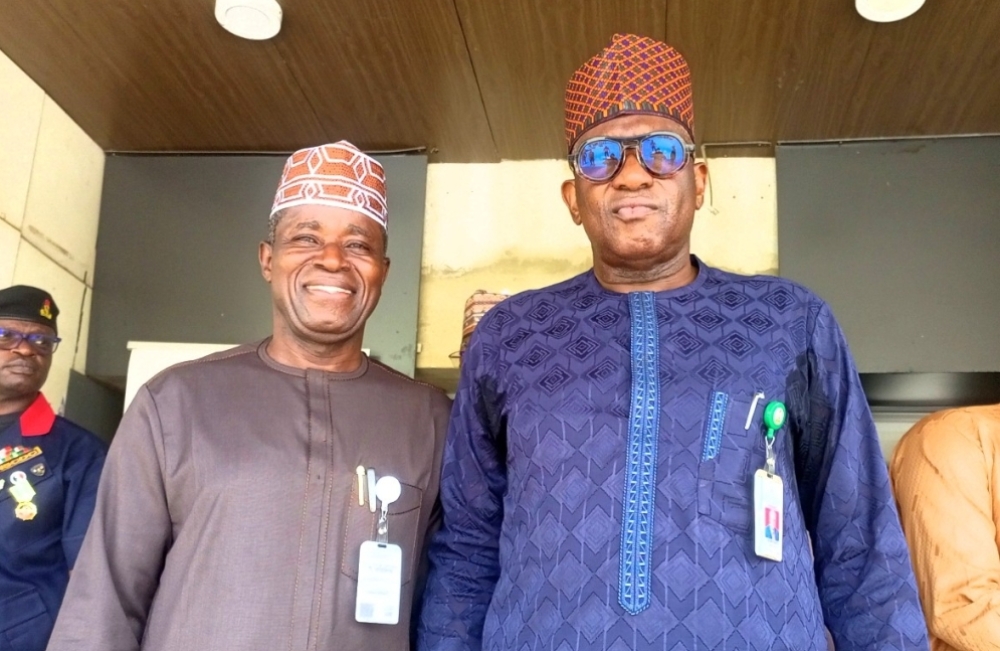
PERMANENT SECRETARY, FEDERAL MINISTRY OF HOUSING AND URBAN DEVELOPMENT, DR. SHUAIB BELGORE ON COURTESY VISITS TO HIS COUNTERPARTS AT THE FEDERAL MINISTRIES OF ENVIRONMENT, ALHAJI SALIHU AMINU USMAN (PHD), AND WORKS, MR RAFIU ADELADAN OLARINRE IN THEIR RESPECTIVE MINISTRIES IN ABUJA, APRIL 29TH, 2026
Permanent Secretary, Federal Ministry of Housing and Urban Development, Dr. Shuaib Belgore on courtesy visits to his counterparts at the Federal Ministries of Environment, Alhaji Salihu Aminu Usman (PhD), and Works, Mr Rafiu Adeladan Olarinre in their respective Ministries in Abuja, April 29th, 2026