Downloads

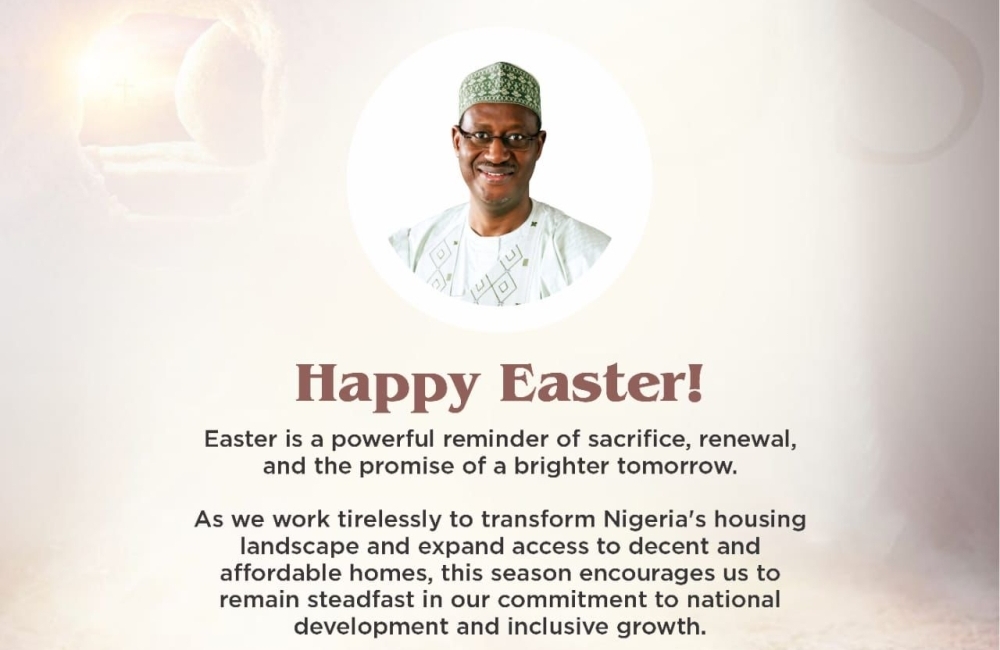
As Christians across Nigeria and around the world celebrate Easter, I extend my warm greetings and best wishes to all our Christian brothers and sisters.
Easter is a season that reminds us of the enduring values of sacrifice, hope, love, and renewal. These values are universal and speak to the shared aspirations of all Nigerians — the desire to build a peaceful, united, and prosperous nation.
As a Muslim, I deeply respect and celebrate with our Christian community at this sacred time. The message of Easter encourages us all to continue working together in unity, compassion, and service to one another.
On behalf of the Federal Ministry of Housing and Urban Development, I wish all Christians a joyful and blessed Easter celebration. May this season renew our collective hope and strengthen our commitment to building a better Nigeria for all.
Happy Easter.


As Christians across Nigeria and around the world celebrate Easter, I extend my warm greetings and best wishes to all our Christian brothers and sisters. As a Muslim, I deeply respect and celebrate with our Christian community at this sacred time. The message of Easter encourages us all to continue working together in unity, compassion, and service to one another. Happy Easter.
Easter is a season that reminds us of the enduring values of sacrifice, hope, love, and renewal. These values are universal and speak to the shared aspirations of all Nigerians — the desire to build a peaceful, united, and prosperous nation.
On behalf of the Federal Ministry of Housing and Urban Development, I wish all Christians a joyful and blessed Easter celebration. May this season renew our collective hope and strengthen our commitment to building a better Nigeria for all.
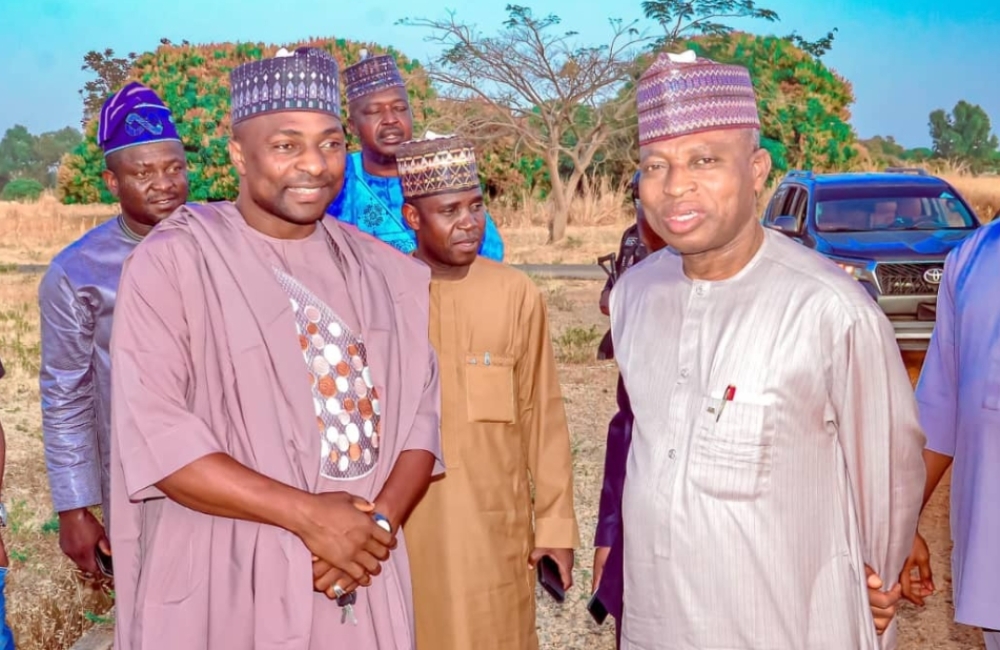
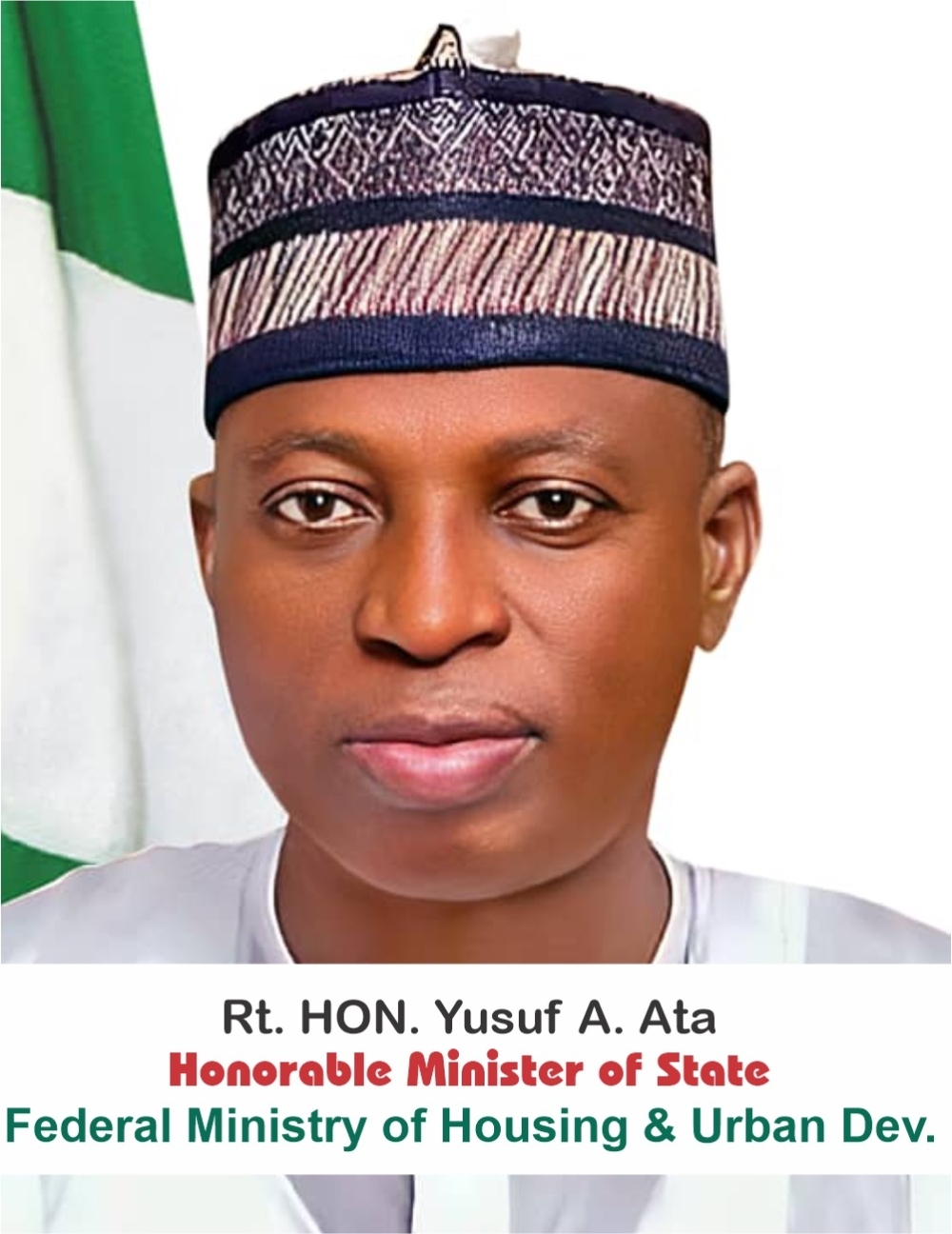
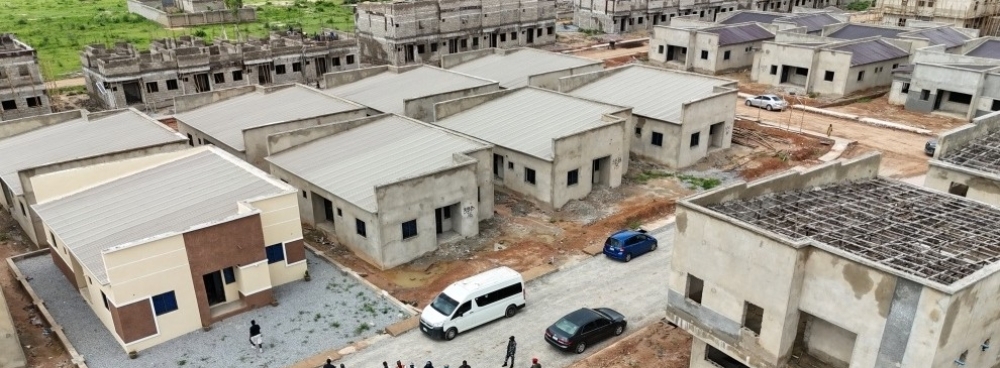
Minister Ata reiterates FG's Commitment to Delivering Affordable Housing * says housing remains a top priority of President Bola Ahmed Tinubu 's Renewed Hope Administration Minister of State for Housing and Urban Development, Rt Hon. Yusuf Abdullahi Ata has reiterated the commitment of the Federal Government to delivering on its promise of providing affordable housing for Nigerians, saying that housing remains a top priority. Ata spoke during an assessment visit to the National Housing Project (NHP) Estate located in Laminga, Jos East local government area, Plateau State. Responding to the request by the Jos east local government for the bulk purchase of some housing units in the estate, Minister Ata said " the Ministry will offer the houses to the local government on current face value, taking in to consideration of some observed delapitation. We will review the initial pricing and address it accordingly" He also reassured the commitment of the Ministry to meeting the housing needs of Nigerians by increasing housing availability and affordability, adding that the administration of President Bola Ahmed Tinubu, GCFR, is working tirelessly to provide housing solutions in the country, through its Renewed Hope Housing Programme. Earlier, the Federal Controller of Housing, Plateau State, Bldr Emmanuel Attah conveyed to the minister the interest of the Jos east local government to bulk- purchase some housing units in the estate and their request for a down review of the initial pricing to enable them take care of the repairs and defray the cost of maintenance for the dilapidated portions in some houses. The NHP Housing Estate in Laminga, Jos Plateau State is expected to provide much-needed housing units, boosting the local economy and improving living standards. The visit by the Hon Minister underscores the government's focus on addressing Nigeria's housing deficit as well as promoting socio - economic well-being of Nigerians ...
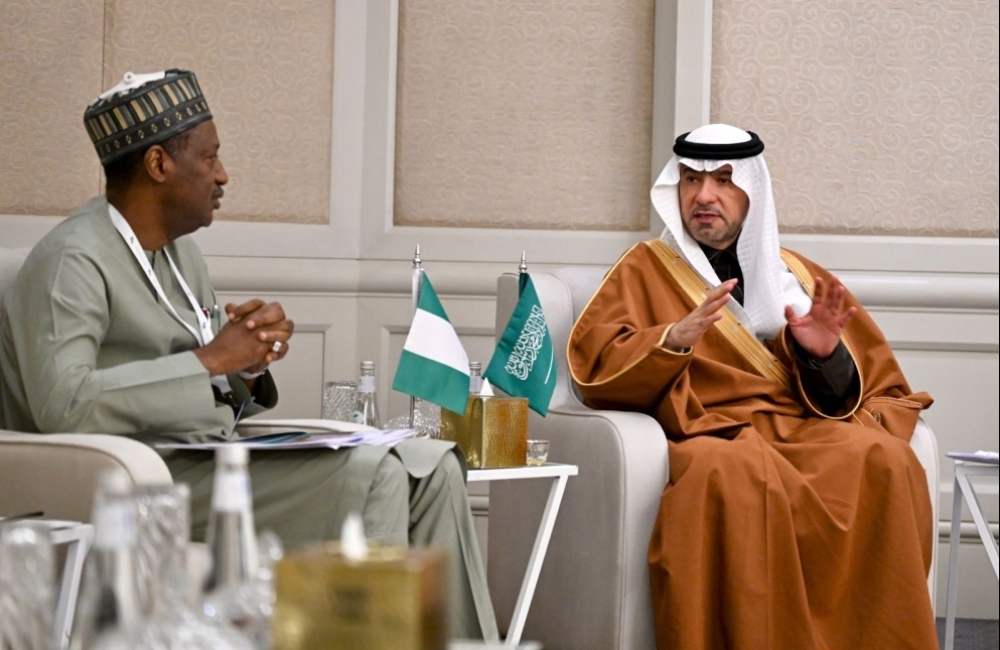
Nigeria, Saudi Arabia Deepen Housing Development Cooperation at 2026 Real Estate Future Forum Riyadh, Saudi Arabia, 30 January 2026: As part of Nigeria’s investor engagement on the sidelines of the 2026 Real Estate Future Forum (RFF 2026) in Riyadh, the Honourable Minister of Housing and Urban Development, Arc. Ahmed Musa Dangiwa, held a high-level bilateral meeting with the Saudi Arabian Minister of Municipal and Rural Affairs and Housing (MOMRAH), Majed bin Abdullah Al-Hogail, alongside senior officials of the Ministry. During the meeting, Arc. Dangiwa presented Nigeria’s flagship Renewed Hope Housing Programme, highlighting its scale, structured delivery architecture, and strong alignment with private capital. He also showcased the Federal Government’s Building Materials Manufacturing Hubs initiative, aimed at accelerating local production, reducing construction costs, creating jobs, and strengthening Nigeria’s construction value chain. “Nigeria is positioning housing not just as a social good, but as a major driver of economic growth, industrialisation, and investment,” Arc. Dangiwa said. “Under the Renewed Hope Housing Programme, we are delivering homes at scale across income segments, supported by clear policies, bankable PPP frameworks, and strong demand fundamentals.” He added that Nigeria is actively seeking strategic partnerships with credible Saudi institutions and firms. “We are keen to deepen collaboration with the Kingdom through MOMRAH and to be introduced to reputable Saudi developers, manufacturers, financiers, and technology partners who are ready to enter the Nigerian market. Our Building Materials Manufacturing Hubs, in particular, offer a compelling opportunity for Saudi investors to participate in local production and long-term value creation,” the Minister noted. In his response, Minister Al-Hogail welcomed Nigeria’s reform-oriented housing agenda and expressed openness to enhanced institutional cooperation between both countries. “Saudi Arabia recognises the scale of Nigeria’s housing demand and the seriousness of the reforms being undertaken to unlock private investment,” Minister Al-Hogail said. “There are clear areas of synergy between our housing and urban development objectives, especially in large-scale housing delivery, construction technologies, and local manufacturing.” He further noted that MOMRAH would support engagement with relevant Saudi stakeholders. “We see value in facilitating connections between Nigerian counterparts and reputable Saudi entities with the experience, capital, and technical capacity to contribute meaningfully to Nigeria’s housing and construction sector,” he added. The meeting reinforces Nigeria’s strategy of leveraging global platforms such as RFF 2026 to mobilise investment, share best practices, and forge strategic alliances that accelerate housing delivery and industrial development under the Renewed Hope Agenda. The Federal Ministry of Housing and Urban Development will continue follow-up engagements with MOMRAH and prospective Saudi partners to translate the discussions into concrete investment pathways and project-level collaborations in Nigeria. ...
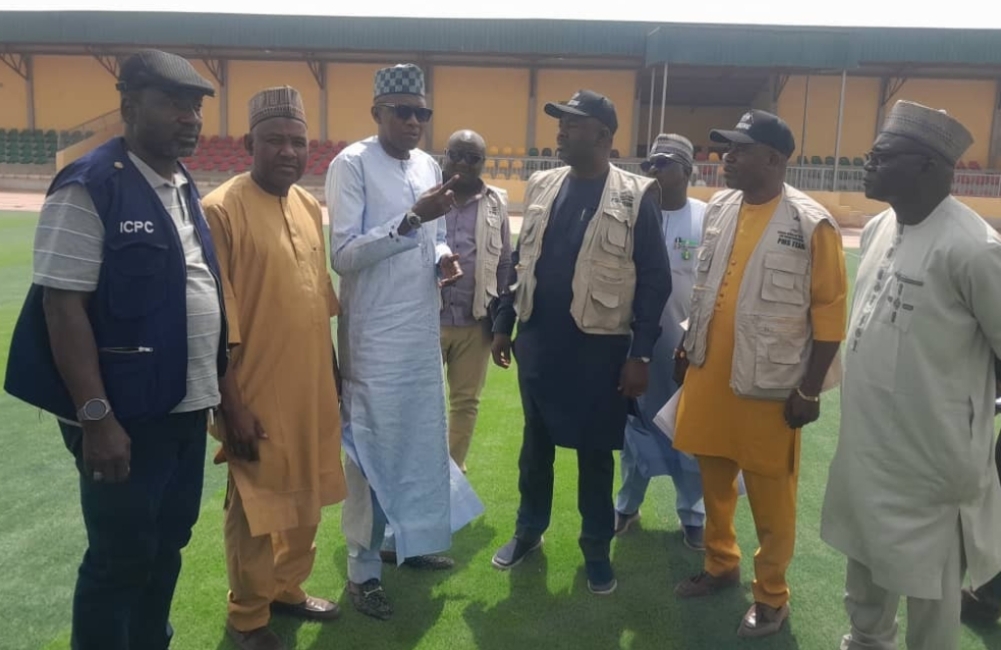
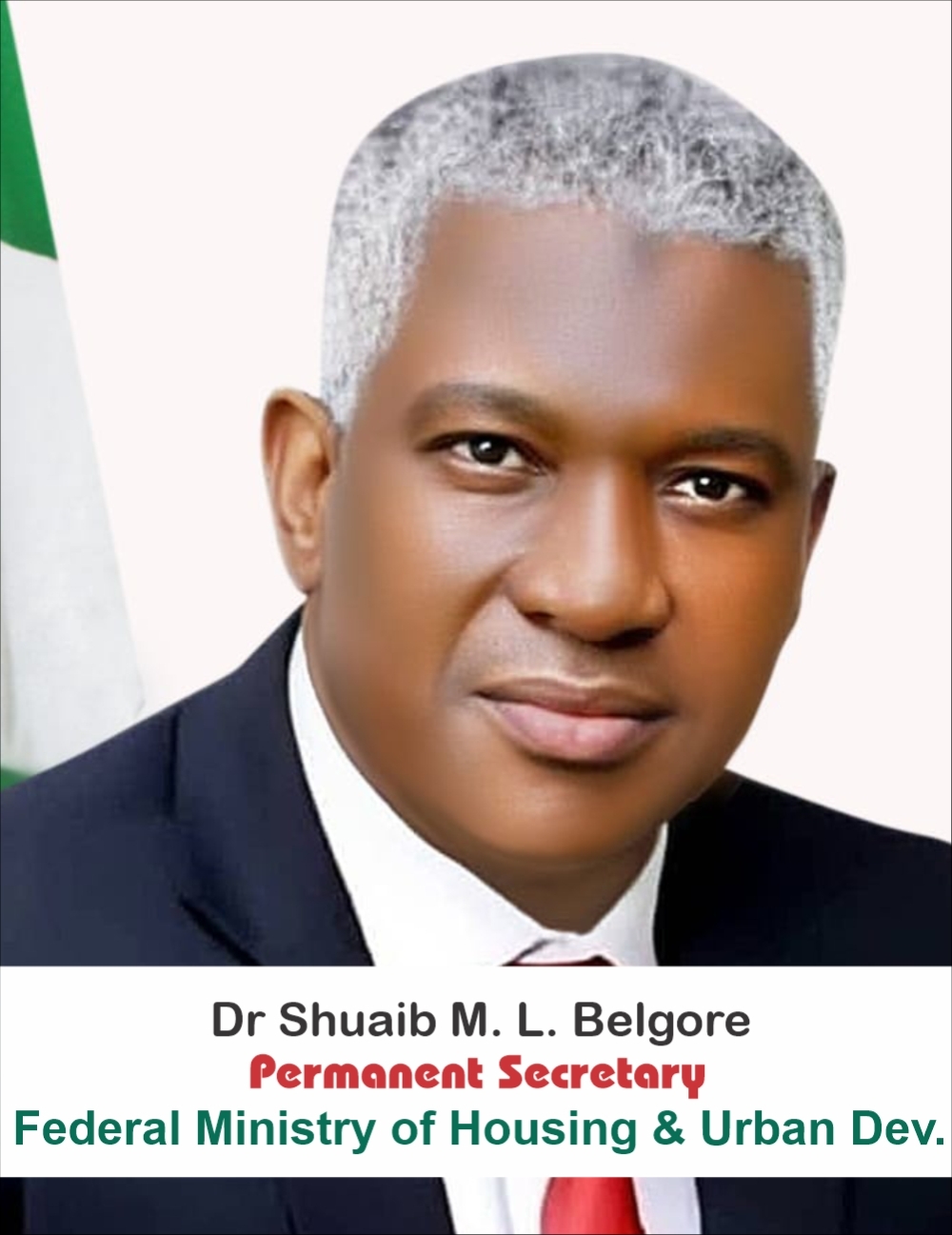
Housing Ministry, ICPC Begin Joint Nationwide Tracking of Constituency Projects * exercise, a clear warning to non-performing, defaulting contractors - Belgore The Federal Ministry of Housing and Urban Development, in collaboration with the Independent Corrupt Practices and Other Related Offences Commission (ICPC), has commenced a joint nationwide verification and tracking of constituency and zonal intervention projects executed by the Ministry across the country. The exercise is aimed at ensuring that all projects are delivered strictly in accordance with approved specifications, uphold principles of transparency and probity, and guarantee value for money for the Nigerian people. The Ministry, through its Special Projects Unit, supervises the execution of Federal Government constituency and zonal intervention projects, while the ICPC serves as the statutory agency responsible for enforcing compliance, due diligence, and integrity in budget implementation and public expenditure. The joint verification exercise was officially flagged off in Kano, Wednesday, 28 January 2026, and is being conducted simultaneously in all states where the projects were implemented. Teams comprising officials of both institutions have been deployed nationwide to carry out on-the-spot inspection, verification, and assessment of project status and quality. Speaking at the flag-off ceremony, the Permanent Secretary of the Ministry, Dr. Shuaib Belgore, represented by the Director, Special Projects Unit, Olatunde Ajayi, stated that the initiative was designed to evaluate the impact of constituency projects and ensure that Nigerians derive the intended socio-economic benefits. “This joint verification and tracking exercise with the ICPC is aimed at evaluating the impact of these projects and ensuring that they are executed to standard for the benefit of the people,” Belgore said. He emphasized that the exercise underscores the Ministry’s unwavering commitment to accountability, transparency, and responsible stewardship of public resources, while also serving as a clear signal to contractors. “The Ministry, in collaboration with relevant oversight agencies, will not hesitate to invite contractors for corrective action where deficiencies are identified, or demand refunds to government coffers where projects have clearly failed to meet contractual obligations,” he added. According to him, reports generated from the exercise will support evidence-based decision-making, assist the Ministry in assessing the relevance and level of implementation of projects, and highlight areas requiring adjustment to strengthen future planning and interventions. Also speaking, the ICPC Head of Constituency Projects Tracking, Bello Idris Bakori noted that the Commission’s participation reflects its mandate to prevent corruption through proactive monitoring of public projects. He explained that the joint effort is intended to deter sharp practices, promote transparency in project execution, and ensure that public funds allocated to constituency interventions translate into tangible development outcomes for citizens. Bakori assured that findings from the exercise would be thoroughly documented and followed up in line with extant laws and procedures to safeguard public interest. Some of the projects visited by the joint team during the flag off of the tracking exercise in Kano include; provision and installation of solar streetlights lights in GGSS Kwa, Bichii local government and Rimingado local government, and construction of sporting facility, indoor complex, football fitch and pavillion in Gwarzo town. Others are construction of Badume - Kyauta road in Dawakin Tofa - Bichi local governments. The tracking exercise of projects executed in Kano state continues tomorrow. ...
HIGHLIGHTS ON THE NATIONAL BUILDING CODE OF NIGERIA
Background and Purpose
• Initiated in 1987 by the defunct National Council of Works and Housing; workshops in 1989 (ASCON, Badagry) and 1990 (Ijebu-Ode) shaped the first draft.
• Formally re-presented at the 2nd National Council on Housing and Urban Development (2005), leading to the 2006 edition.
• The Code was developed to address poor planning of cities, incessant building collapse, fire disasters, quackery, use of substandard materials, and weak regulation.
• Aim: Establish minimum standards for pre-design, design, construction, and post-construction stages of buildings to ensure safety, quality, and professionalism.
Structure of the Code
1. Part I – Administration
o Sets out definitions, scope, and applicability of the Code.
o Establishes the Building Code Advisory Committee (BCAC), under the Minister of Housing & Urban Development, responsible for periodic review and oversight.
o Provides clear interpretations, definitions, and abbreviations of building terms.
2. Part II – Technical (Professionals)
o Building Design Classifications: Categorizes buildings into Use Groups A–L, e.g. Assembly, Business, Educational, Industrial, High Hazard, Institutional, Mercantile, Residential, Storage, Mixed Use, Utility.
o Building Construction Classifications: Provides technical standards for fire safety, structural integrity, materials, and occupancy.
o Defines responsibilities of registered professionals (Architects, Engineers, Builders, Surveyors, etc.) in all stages.
3. Part III – Enforcement
o Divides the building process into four regulated stages:
Pre-Design Stage – planning, approvals, environmental and safety assessments.
Design Stage – adherence to professional standards and safety codes.
Construction Stage – site supervision, materials quality control, and health & safety compliance.
Post-Construction Stage – building use certification, maintenance standards, and inspections.
o Establishes the role of the Code Enforcement Officer (CEO).
4. Part IV – Schedules and References
o Provides supporting documents, data, tables, and approved forms linked to the Code.
o Incorporates referenced standards such as National Fire Safety Code and others.
Key Provisions
• Minimum Standards: All buildings must comply with minimum requirements for safety, durability, and habitability.
• Certification: No building can be occupied without a Certificate of Use and Habitation issued by enforcement officers.
• Fire Safety: Detailed fire hazard classifications and preventive standards.
• Accessibility: Public buildings must make provisions for the physically challenged.
• Zoning & Planning: Integrates urban and regional planning laws, requiring development permits and compliance with zoning regulations.
• Professional Accountability: Only registered professionals may prepare, design, and execute building works.
• Prohibition of Quackery: Prevents use of non-professionals and untested materials.
• Maintenance: Every building must have a Building Maintenance Manual.
• Enforcement: State governments are encouraged to adopt the Code into their laws for effective local implementation.
Significance
• Provides a national benchmark for building standards in Nigeria.
• Aims to reduce building collapse, fire outbreaks, and disasters.
• Encourages professionalism, quality assurance, and compliance across the industry.
• Promotes safety, accessibility, and sustainable urban development.

The statement from the Hon. Minister of State For Housing & Urban Development, Yusuf Abdullahi.
It is with profound sadness that I, Hon. Yusuf Abdullahi Ata, Minister of State for Housing and Urban Development, mourning the passing of Former President, late Muhammadu Buhari.
He departed this life on Sunday, June 13, 2024, at a hospital in London.
As we bid farewell to a leader who served Nigeria with dedication, I extend my deepest condolences to the Buhari family, the government, and the people of Nigeria.
May Allah grant late President Buhari Aljannah Firdaus and grant the family patience and fortitude during this difficult time.
As a nation, we reflect on President Buhari's service and contributions to our country's development.
May Allah grant us the strength to carry on his legacy of public service and patriotism and grant President Buhari's soul eternal rest. Amen.
The Minister of State for Housing & Urban Development Hon. Yusuf Abdullahi Ata,
July 13th, 2025.

OPENING REMARKS BY THE PERMANENT SECRETARY, FEDERAL MINISTRY OF HOUSING AND URBAN DEVELOPMENT, DR. SHUAIB M.L. BELGORE, NPOM, OON AT THE NATIONAL LANDS REGISTRATION AND DOCUMENTATION PROGRAMME HELD ON 19TH MARCH 2025, AT TRANSCORP HILTON HOTEL, ABUJA
PROTOCOLS
1.0 I am honoured to make opening remarks at this pivotal National Lands Registration and Documentation Programme. This gathering is a significant step toward strengthening Nigeria’s land administration system, a crucial factor in promoting economic growth, social stability, and national development. I extend my heartfelt appreciation to all our distinguished guests and stakeholders who have taken the time to be here today.
2.0 The Theme of this programme speaks directly to one of the most pressing challenges in Nigeria’s housing and urban development sector—Land Registration and Documentation more especially, Sub-Saharan African Countries. As we are all aware, land ownership and security of tenure remains fundamental to sustainable urban development, real estate investment, agricultural productivity, and infrastructure development.
3.0 The National Lands Registration and Documentation Programme is a response to these longstanding challenges. This initiative, spearheaded by the Federal Ministry of Housing and Urban Development, seeks to advocate for the modernization and streamlining of land registration processes across the country by harmonizing land records, digitizing documentation systems, and enhancing accessibility to land information.
The key objectives of this programme include:
i. Ensuring a unified and efficient Land Registration System by working closely with State Governments and Land Actors and Agencies with the view of creating a standardized approach that will reduce duplication, inconsistencies, and bureaucratic bottlenecks.
ii. Leveraging Technology for land digitization which aims at the transition from manual to digital land records that improves data security, minimize fraudulent activities, and facilitate ease of doing business in the real estate and mortgage sectors in line with global best practices.
iii. Providing legal certainty and security of tenure to attain proper land documentation. Landowners will have the assurance of legal protection, thereby fostering confidence in land transactions.
iv. Enhancing investment opportunities in a well-structured land registration system that will unlock potential of land assets, enabling access to credit facilities and boosting investments in housing, agriculture, and infrastructure.
v. Reducing Land Disputes and Promoting Social Stability in a clear, well-documented land titles system to reduce land-related conflicts that have hindered development and economic prosperity in many communities.
4.0 I am using this medium to laud the significant initiative of the Honourable Minister, Federal Ministry of Housing and Urban Development in driving this process. I will also use this opportunity to thank the State Governments, the World Bank, Organizers of this programme and all collaborating institutions for their commitment to addressing this critical issue. The road ahead may be challenging, but with collective efforts, strategic planning, and sustained commitment, we can establish a land registration system we can be proud of.
5.0 Once again, I warmly welcome you all and look forward to a productive and insightful engagement.
Thank you, and God bless the Federal Republic of Nigeria.

KEYNOTE ADDRESS BY THE HON. MINISTER OF HOUSING AT THE STAKEHOLDER FORUM ON DEVELOPMENT OF FISCAL INCENTIVES FOR MANUFACTURERS OF LOCAL BUILDING MATERIALS COMPONENTS IN NIGERIA
Protocols:
God bless the Federal Republic of Nigeria.

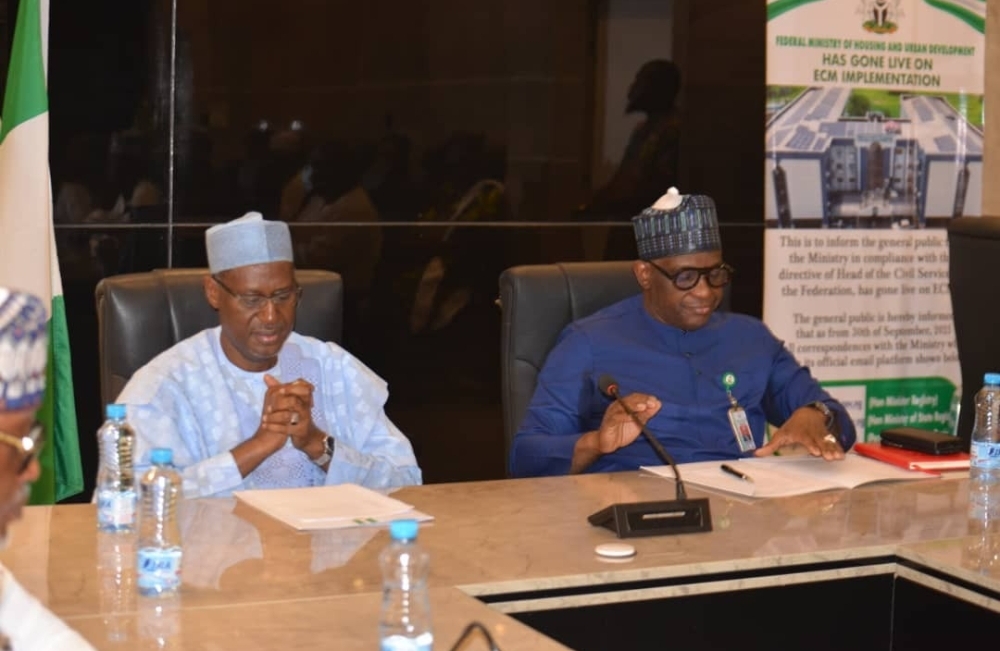
Housing Ministry, Shelter Advisory Convene Summit on Renewed Hope Housing PPP

FMHUD 2025 STAFF AWARDS & RECOGNITION CEREMONY, MONDAY, MARCH 30, 2026
FMHUD 2025 STAFF AWARDS & RECOGNITION CEREMONY, Monday, March 30, 2026
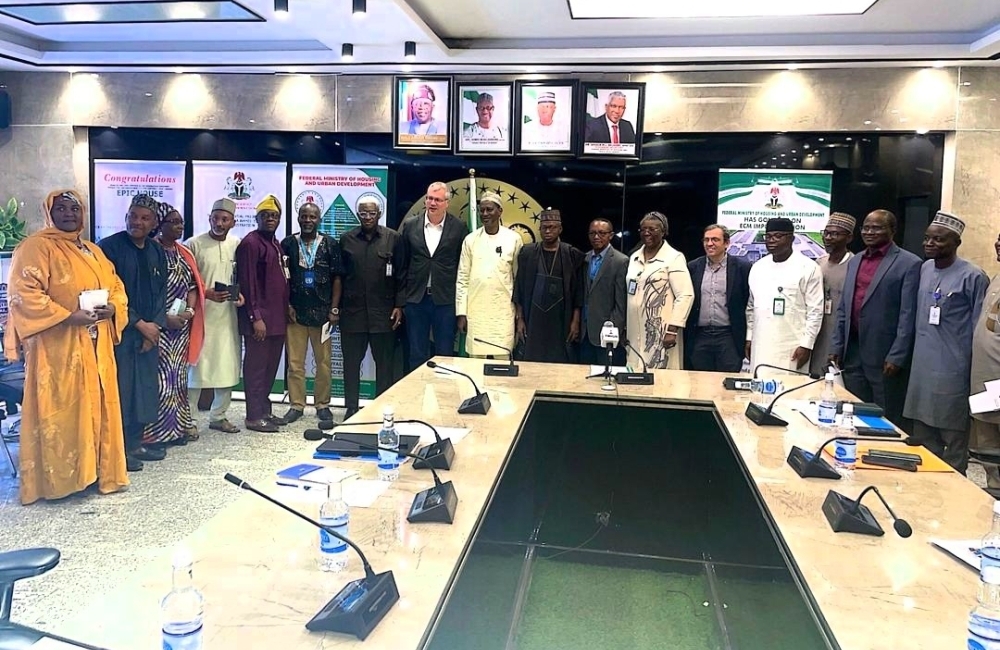
MEETING OF THE HON MINISTER, FMHUD AND HEAD OF UN HABITAT, WEST AFRICA HUB, DAKAR, MR MATHIAS, SPALIVIERO, WEDNESDAY, 25TH FEBRUARY, 2025
Meeting of the Hon Minister, FMHUD and Head of UN Habitat, West Africa Hub, Dakar, Mr Mathias, Spaliviero, Wednesday, 25th February, 2025